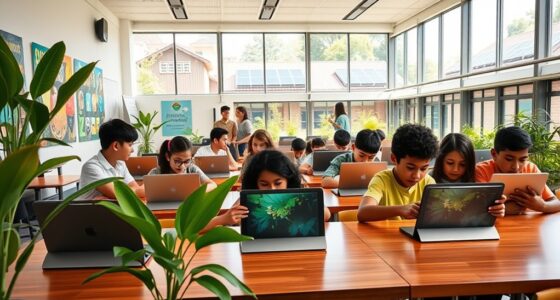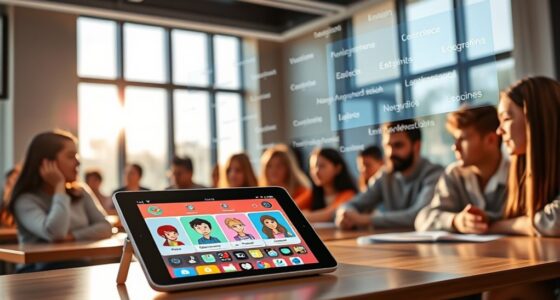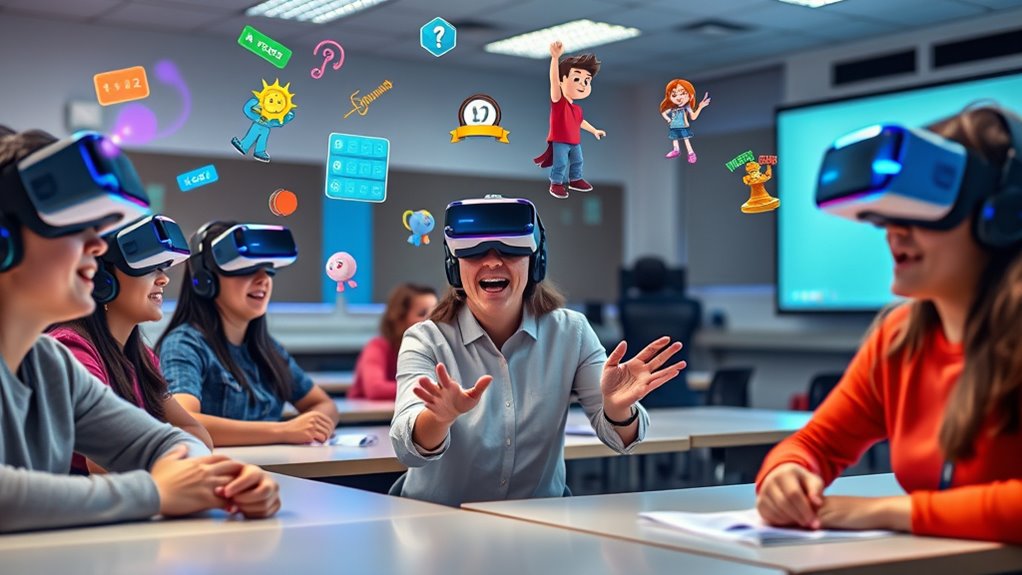

Integrating gamification and immersive AR/VR in classrooms creates engaging environments where you can motivate students, boost participation, and address diverse learning styles. These technologies make lessons interactive, fun, and memorable by incorporating elements like leaderboards, badges, and 3D models. They help students take ownership of their learning and develop critical skills like problem-solving and collaboration. To discover how you can transform your teaching approach, continue exploring these powerful tools and strategies.
Key Takeaways
- Integrating gamification with AR/VR creates engaging, interactive learning environments tailored to diverse student needs.
- AR enhances hands-on exploration of concepts through real-world overlays, making abstract topics tangible.
- VR offers immersive experiences like virtual field trips, boosting motivation and deepening understanding.
- Combining these technologies fosters collaboration, critical thinking, and personalized feedback in the classroom.
- Overall, they transform traditional lessons into dynamic, technology-driven experiences that promote active learning.
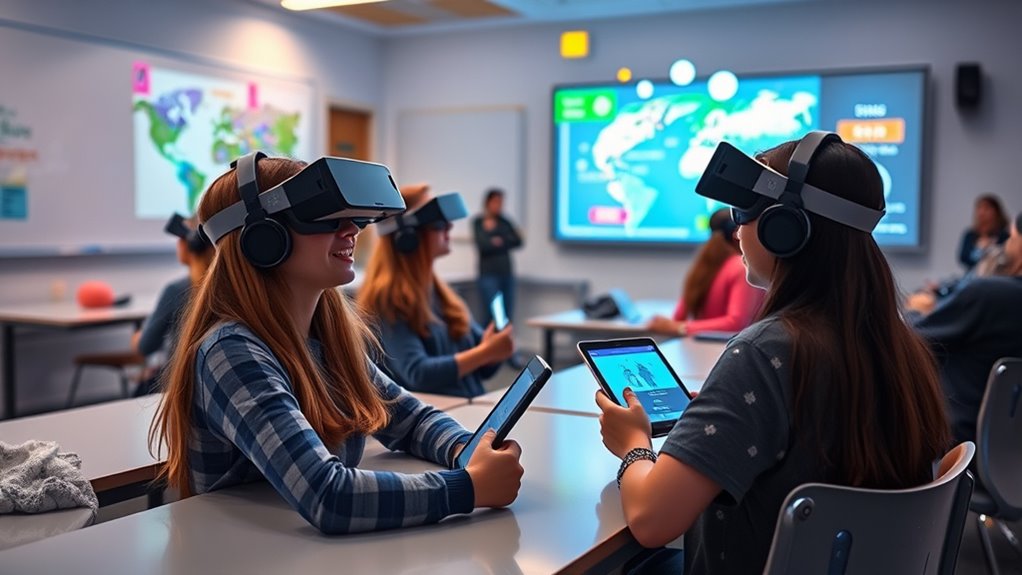
As technology continues to transform education, gamification and immersive AR/VR experiences are increasingly becoming vital tools in classrooms. These innovative approaches are changing how you engage students, making learning more interactive and enjoyable. When you incorporate gamification, you tap into students’ natural love for competition, rewards, and challenges, which boosts overall student engagement. By integrating game elements such as leaderboards, badges, and point systems into lessons, you create a dynamic environment where students are motivated to participate actively. This shift from traditional instruction to more game-based learning encourages students to take ownership of their progress, fostering a sense of achievement and curiosity.
Gamification boosts engagement by tapping into students’ love for competition and rewards.
Immersive AR (Augmented Reality) and VR (Virtual Reality) take this engagement a step further. With AR, you can overlay digital information onto the real world, allowing students to explore concepts in a tangible way. For example, students can examine 3D models of molecules or historical artifacts right in their classroom, making abstract topics concrete. VR transports students to entirely different worlds, enabling experiential learning that’s impossible with textbooks alone. Imagine taking your students on a virtual field trip to ancient Rome or deep into the human bloodstream—these experiences captivate their attention and deepen understanding. Both AR and VR help you break down complex ideas into interactive, memorable lessons that keep students focused and eager to learn.
Technology integration plays a vital role in making these tools effective. When you seamlessly incorporate gamification and AR/VR into your curriculum, you create a more inclusive, engaging learning environment. These technologies cater to diverse learning styles—visual, kinesthetic, or auditory—ensuring that each student can connect with the material in a way that resonates. Plus, the instant feedback provided by game mechanics and immersive experiences allows you to monitor student progress in real-time, helping you tailor your teaching to meet individual needs. As students become more involved and motivated, they develop critical thinking, problem-solving, and collaboration skills naturally through these engaging methods.
Furthermore, understanding how nutritional value in foods like baked kale can support student health may contribute to better concentration and energy levels in class, enhancing overall learning experience. In essence, by embracing gamification and immersive AR/VR, you’re not just adding new tools—you’re transforming your classroom into a vibrant space where technology enhances student engagement and learning outcomes. These innovations make lessons more interactive, fun, and meaningful. As you continue to integrate these technologies, you’ll notice students becoming more enthusiastic, motivated, and eager to explore new topics. This approach empowers you to create a learning environment that’s both effective and inspiring, preparing students for a future where digital literacy and engagement are key.
Frequently Asked Questions
How Cost-Effective Are Ar/Vr Classroom Implementations?
AR/VR classroom implementations can be cost-effective if you conduct a thorough cost analysis and plan your budget carefully. While initial expenses for devices and software might seem high, they often reduce long-term costs by enhancing engagement and learning outcomes. By prioritizing essential tools and seeking funding or discounts, you can make AR/VR technology affordable and sustainable, ensuring your investment benefits both students and your overall educational strategy.
What Training Is Needed for Teachers to Use Ar/Vr Tools Effectively?
Imagine stepping into a vibrant classroom where AR and VR tools transform lessons into immersive adventures. To use these effectively, you need targeted teacher training that covers technology integration and hands-on practice with AR/VR devices. This training equips you to seamlessly blend these tools into your teaching, helping students engage deeply. By mastering this technology, you turn learning into an exciting journey, making complex concepts approachable and memorable.
Are There Any Health Risks Associated With Prolonged Ar/Vr Use?
Prolonged AR/VR use can cause health risks like eye strain and motion sickness. You might experience discomfort or blurred vision if you wear headsets too long. To minimize these risks, take regular breaks and guarantee proper fit and lighting. If you notice persistent symptoms, it’s crucial to stop using the devices and consult a healthcare professional. Being mindful of these issues helps you use AR/VR safely and effectively.
How Do Ar/Vr Tools Support Diverse Learning Needs?
While some may see it as a challenge, AR/VR tools truly embrace personalization strategies, allowing you to tailor learning experiences to diverse needs. They include accessibility enhancements, such as adjustable text sizes and audio descriptions, ensuring all students can engage effectively. By providing immersive, customizable environments, AR/VR helps every learner connect with content in ways that suit their unique strengths and preferences, fostering inclusive and effective education.
What Evidence Exists on Long-Term Educational Outcomes From Ar/Vr?
You’ll find that evidence shows AR/VR enhances long-term retention and boosts engagement sustainability. Studies indicate students retain information better over time when immersive experiences are involved because they create memorable, interactive learning moments. These tools motivate continuous participation and curiosity, leading to sustained interest in lessons. While more longitudinal research is needed, current data suggests AR/VR positively influences long-term educational outcomes by making learning more engaging and memorable.
Conclusion
By integrating gamification and immersive AR/VR into your classroom, you’re transforming learning into an exciting, engaging experience. Studies show students who use AR/VR score 30% higher on assessments, highlighting its impact. Embrace these technologies to boost motivation and understanding, making lessons unforgettable. Don’t miss the chance to prepare your students for the future—immersive learning tools are reshaping education. Immerse yourself now and watch your classroom come alive with innovation!