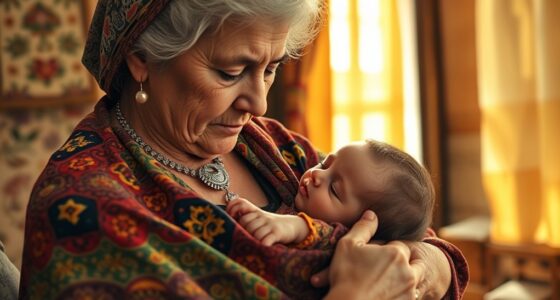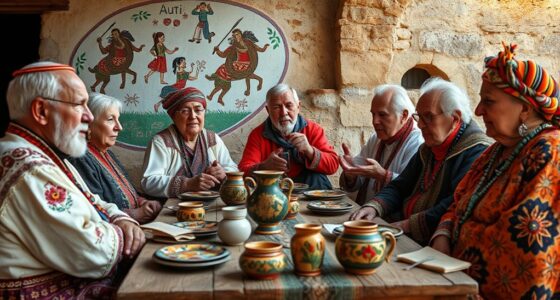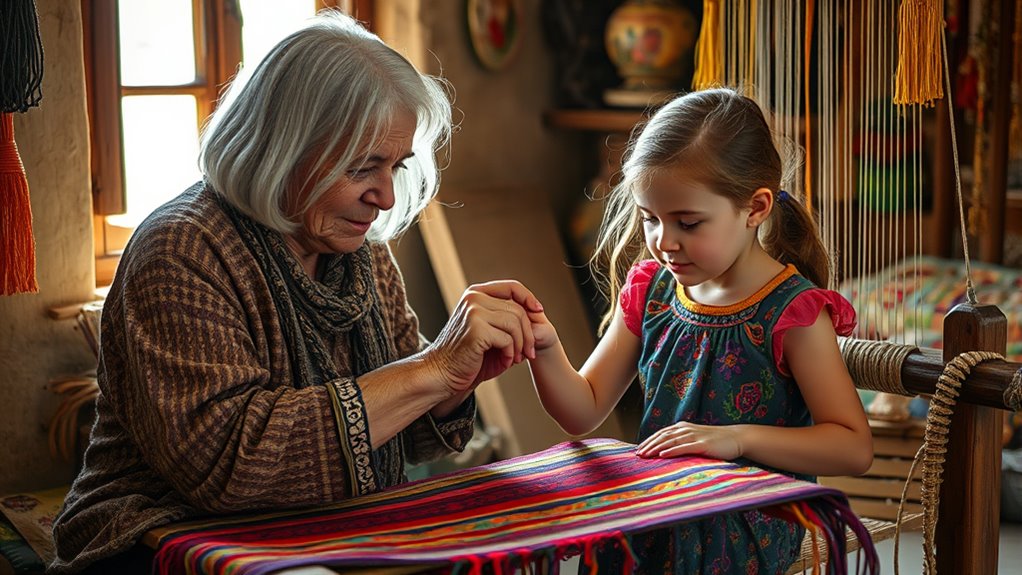

Inter-generational transmission of culture is how you pass down beliefs, traditions, and practices from one generation to the next, helping to preserve your community’s identity. You participate actively by sharing stories, celebrating festivals, and practicing customs that connect you with your roots. This process keeps your cultural heritage alive and vibrant, shaping both individual and collective identities. If you keep exploring, you’ll discover even more ways this essential process keeps cultures thriving across generations.
Key Takeaways
- Inter-generational transmission involves passing beliefs, traditions, and practices from elders to younger generations to preserve cultural identity.
- Active participation in cultural activities reinforces heritage and fosters pride among community members.
- Methods include storytelling, practicing customs, celebrating festivals, and teaching traditional crafts and language.
- This transmission strengthens community bonds, maintains collective memory, and keeps cultural identity relevant amid modernization.
- Successful heritage transfer ensures cultural legacy endures, shaping individual and collective identities over time.
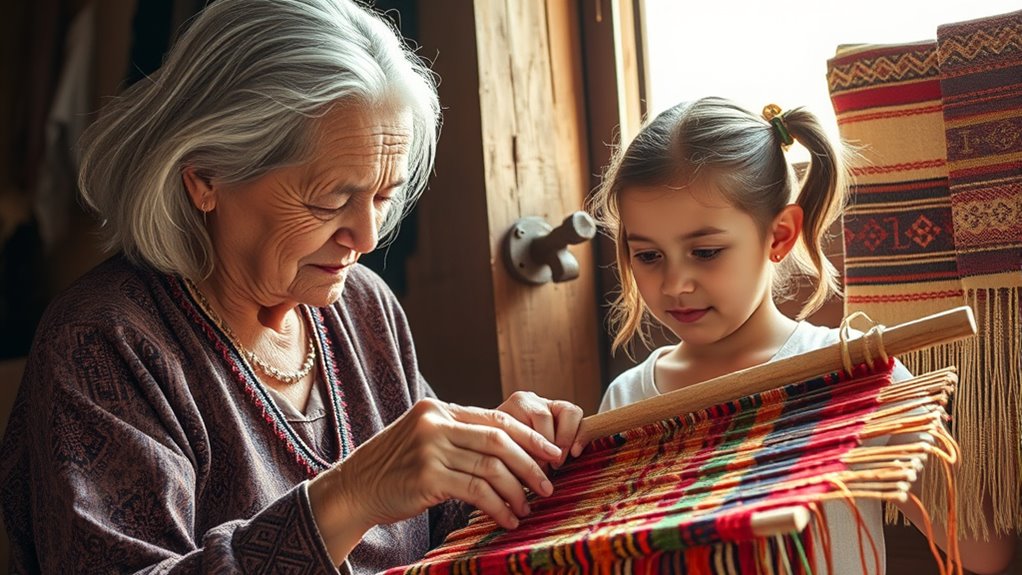
Inter-generational transmission of culture is the process through which beliefs, values, traditions, and practices are passed from one generation to the next. It’s how you maintain a sense of cultural identity, guaranteeing that the unique aspects of your heritage survive over time. When you actively participate in sharing stories, customs, and rituals with younger family members, you’re helping to preserve the essence of your culture. This transmission isn’t just about passing down facts; it’s about embedding a sense of belonging and understanding that connects you to your ancestors and community. As you teach others about your cultural practices, you reinforce your heritage preservation efforts, making sure that the traditions continue to thrive despite external influences or modernization.
Your role in cultural transmission is crucial because it shapes how future generations perceive themselves and their place in the world. If you neglect this process, you risk losing invaluable parts of your cultural identity. For example, passing down language, folklore, or traditional crafts ensures that these elements aren’t forgotten. When you tell stories about your history or demonstrate traditional skills, you’re actively contributing to a living, breathing culture. This helps the younger generation appreciate their roots and develop pride in their heritage. It also fosters resilience, as cultural identity can act as a source of strength during challenging times.
Furthermore, your involvement in heritage preservation can take many forms—celebrating festivals, maintaining traditional attire, or practicing customs that have been handed down. These acts serve as tangible links to your history and help keep cultural identity vibrant. Engaging in cultural practices that incorporate traditional technology or techniques can also deepen understanding and appreciation of your heritage. By participating in community events or teaching others about your traditions, you ensure that your culture remains relevant and meaningful. The transmission process isn’t just about individual growth; it’s about nurturing a collective memory that sustains your community’s unique identity.
Ultimately, your active engagement in passing down beliefs, values, and practices keeps your cultural legacy alive. It’s about more than just remembering; it’s about living your heritage daily. When you prioritize heritage preservation and foster a strong cultural identity, you help create a foundation for future generations to understand who they are and where they come from. This ongoing process enriches your community’s fabric and ensures that the richness of your culture endures, shaping identities for years to come.
Top picks for "inter generational transmission"
Open Amazon search results for this keyword.
As an affiliate, we earn on qualifying purchases.
Frequently Asked Questions
How Does Technology Influence Cultural Transmission Across Generations?
Technology greatly influences cultural transmission across generations by making it easier for you to share and access stories through digital storytelling and social media. You can preserve traditions, values, and customs in ways that reach a wider audience instantly. Social media platforms allow you to connect with family members and community members, ensuring cultural practices are passed down, adapted, and celebrated, keeping your culture vibrant and relevant for future generations.
What Role Do Language Shifts Play in Cultural Inheritance?
Imagine losing your favorite childhood song—that’s how language shifts impact cultural inheritance. When you witness a community embrace language revitalization, it’s like restoring a essential thread in their cultural fabric. Language shifts can threaten linguistic preservation, risking cultural loss. But by actively supporting efforts to revitalize endangered languages, you help preserve unique worldviews and traditions, ensuring future generations inherit the richness of their ancestors’ voices.
How Do Cultural Changes Impact Inter-Generational Relationships?
Cultural changes can strengthen or challenge your inter-generational relationships. As shared values evolve, you might find new ways to connect, but sometimes family stories become less relevant or misunderstood. You may need to adapt your communication and find common ground to preserve bonds. Embracing change allows you to honor traditions while creating space for new perspectives, helping maintain meaningful relationships across generations.
Can Cultural Transmission Occur Through Non-Verbal Means?
Yes, cultural transmission can occur through non-verbal means. You might use gesture communication, like hand signs or facial expressions, to pass on traditions and values without words. Visual symbolism, such as symbols or art, also plays a big role in sharing cultural meanings across generations. These non-verbal methods help maintain cultural identity, especially when language barriers exist or in contexts where silent communication is more appropriate.
How Do Migration and Globalization Affect Cultural Continuity?
Migration and globalization dramatically shake your cultural roots, threatening your cultural preservation and forcing intense identity negotiation. As you move across borders or connect worldwide, you might feel your traditions slipping away or transforming beyond recognition. But this process also offers a chance to blend cultures creatively, forging a richer identity. You adapt, negotiate, and redefine your heritage, ensuring your culture survives and thrives in a new, interconnected world.
Conclusion
As you pass down stories and traditions, you become the bridge connecting generations, like a sturdy tree whose roots run deep into the earth. Your words and actions ripple through time, shaping the next chapter of your culture’s story. Imagine your legacy as a vibrant tapestry, woven with memories and values, flourishing in the warm sunlight of shared understanding. In this way, you guarantee that your culture’s heartbeat continues to echo, vibrant and alive, for generations to come.