
Discover Sardinia’s rich culinary heritage through its traditional dishes. You’ll enjoy unique cheeses like pecorino sardo, crafted from centuries-old techniques that highlight local craftsmanship. Pair these with rustic breads such as pane carasau, baked with age-old methods that preserve authentic flavors. The island’s cuisine also features open-fire roasting and underground baking, creating smoky, rustic tastes. If you continue exploring, you’ll uncover the deep cultural stories woven into each delicious bite.
Key Takeaways
- Sardinian cuisine prominently features pecorino sardo, reflecting local craftsmanship and natural resources.
- Traditional dishes often incorporate aged or fresh pecorino sardo, showcasing diverse flavors and textures.
- Ancient cooking techniques like open-fire roasting and underground baking preserve authentic flavors.
- Indigenous breads like pane carasau exemplify age-old baking methods integral to Sardinian culinary identity.
- Culinary practices emphasize natural ingredients and artisanal skills passed through generations, maintaining cultural heritage.
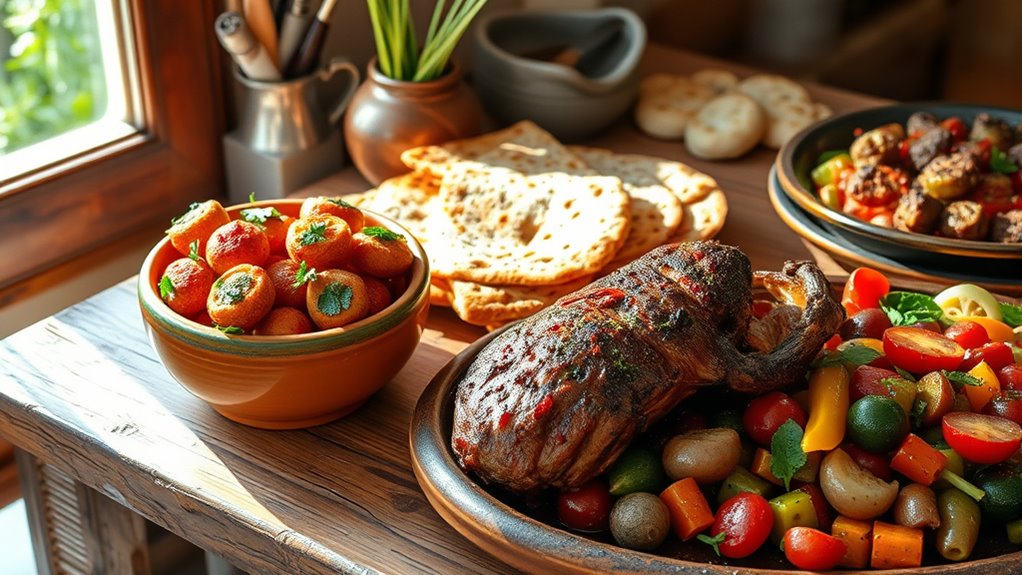
Have you ever wondered what makes Sardinian cuisine so unique? It’s a rich tapestry woven from centuries of tradition, where every dish tells a story of the island’s history and culture. At the heart of this culinary heritage are the Sardinian cheese varieties, which showcase the island’s craftsmanship and natural resources. These cheeses, like pecorino sardo, are more than just ingredients; they’re symbols of local identity. Made from sheep’s milk, pecorino sardo ranges from soft and fresh to hard and aged, each type offering distinct flavors and textures. These cheeses are often enjoyed on their own, paired with local bread, or incorporated into traditional recipes that have been handed down through generations.
Sardinian cheese, especially pecorino sardo, epitomizes the island’s rich culinary heritage and craftsmanship.
What truly sets Sardinian cuisine apart are the ancient cooking techniques still used today. The island’s culinary methods have roots that stretch back centuries, preserving a sense of authenticity and connection to the past. For example, the use of open-fire cooking and underground ovens reflects how Sardinians historically prepared their food, utilizing the natural landscape for efficiency and flavor. These techniques lend a smoky depth to dishes like roasted meats and vegetables, giving them a rustic, hearty character. Another example is the traditional preparation of pane carasau, a thin, crispy bread baked using simple, age-old methods that require skill and patience. This bread, also known as “carta da musica” because of its delicate texture, has been a staple for centuries, often used as a base for other dishes or eaten on its own.
The island’s approach to preserving its culinary heritage is evident in the meticulous way these ancient techniques are still practiced. It’s not just about cooking; it’s about maintaining a cultural identity. Local artisans and cooks adhere closely to traditional methods, ensuring that each dish retains its original essence. This dedication results in flavors that are authentic and deeply rooted in Sardinian history. Whether it’s the slow aging of cheese to develop complex flavors or the traditional methods of bread baking, these techniques connect you directly to the past with every bite. Additionally, the use of natural ingredients and sustainable practices helps preserve the authenticity and purity of Sardinian cuisine for future generations.
When you explore Sardinian dishes, you’re not just tasting food—you’re experiencing centuries of craftsmanship passed down through generations. The combination of unique cheese varieties and ancient cooking techniques creates a culinary landscape that’s both rich and timeless. It invites you to appreciate the island’s history and respect the artistry behind each dish, making your culinary journey through Sardinia truly unforgettable.
Top picks for "culinary heritage traditional"
Open Amazon search results for this keyword.
As an affiliate, we earn on qualifying purchases.
Frequently Asked Questions
What Are the Key Ingredients in Sardinian Cuisine?
You’ll find that key ingredients in Sardinian cuisine include fresh seafood, hearty bread, and rich cheeses. Mediterranean spices add depth, while unique local herbs like myrtle, fennel, and wild thyme bring distinctive flavors. You might also use sun-dried tomatoes, olives, and pork to create authentic dishes. These ingredients combine to give Sardinian food its bold, rustic taste, making every meal a celebration of the island’s rich culinary traditions.
How Has Sardinian Culinary Tradition Evolved Over Centuries?
Like a river winding through time, Sardinian culinary traditions have evolved, blending ancient influences with new flavors. You see, historical food preservation methods, such as drying and curing, preserved tastes while allowing dishes to adapt. Over centuries, these influences shaped a rich tapestry of flavors, from pastoral shepherding to Mediterranean trade, creating a unique culinary identity that honors the past while embracing change.
Are There Regional Variations in Sardinian Dishes?
Yes, you’ll notice regional variations in Sardinian dishes that showcase distinct flavors and culinary diversity across the island. In the mountainous interior, you might enjoy hearty, rustic flavors, while coastal areas emphasize fresh seafood and Mediterranean influences. These regional differences add depth to Sardinian cuisine, allowing you to experience a rich tapestry of local flavors and culinary traditions that reflect the island’s diverse cultural heritage.
What Are Common Cooking Techniques Used in Sardinian Kitchens?
In Sardinian kitchens, you’ll find traditional grilling and pasta preparation as common techniques. You might grill meats and vegetables over open flames, giving dishes smoky flavors. For pasta, you often prepare it simply with fresh ingredients, highlighting the quality of local produce. These methods emphasize authenticity and tradition, allowing you to enjoy hearty, flavorful meals rooted in Sardinian culinary heritage.
How Do Sardinian Dishes Reflect Local History and Culture?
You see Sardinian dishes as living stories, echoing medieval influences and pastoral traditions like a tapestry woven through centuries. These recipes mirror the island’s history, showcasing hearty, rustic flavors that celebrate shepherding and local craftsmanship. By savoring these dishes, you connect with Sardinia’s soul—its ancient roots, resilient spirit, and the way its people have preserved their cultural identity through generations of culinary artistry.
Conclusion
Now that you’ve explored Sardinia’s rich culinary heritage, you’ve seen how these dishes are the heart and soul of the island. Each bite tells a story, blending history and tradition in every flavor. So, don’t be a stranger—dive right in and savor these authentic tastes. Remember, you’re not just trying food; you’re tasting a piece of Sardinia’s soul, and once you do, you’ll understand why it’s truly a treasure worth cherishing.