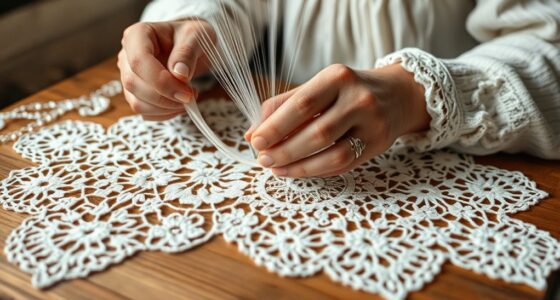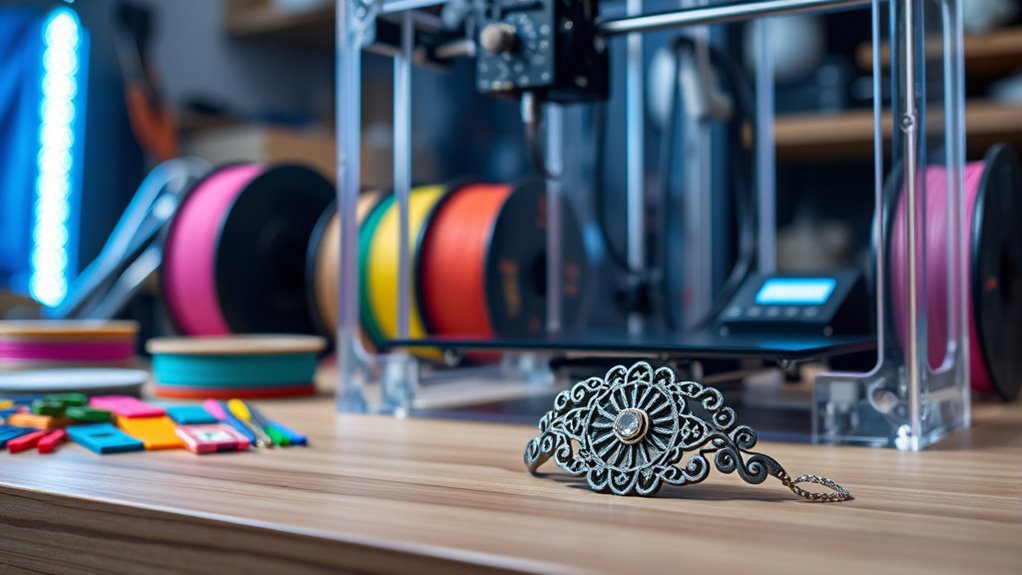

3D printing revolutionizes your craft projects by allowing you to create highly customized and precise items like jewelry, decor, and art pieces. By choosing the right materials—resins, plastics, or flexible filaments—you can enhance durability, look, and feel. Optimizing your digital designs guarantees efficient printing and better results. Combining thoughtful design with material selection helps you achieve beautiful, functional creations. Keep exploring to discover how to make the most of 3D printing in your crafts.
Key Takeaways
- 3D printing enables the creation of highly personalized craft items like jewelry, decor, and art with precise customization.
- Material selection impacts the durability, appearance, and functionality of custom craft projects.
- Designing optimized digital models ensures accurate, efficient printing and reduces material waste.
- Combining design strategies with suitable materials enhances both aesthetic appeal and structural integrity.
- Integrating 3D printing techniques fosters innovative, high-quality, and unique craft creations tailored to individual preferences.
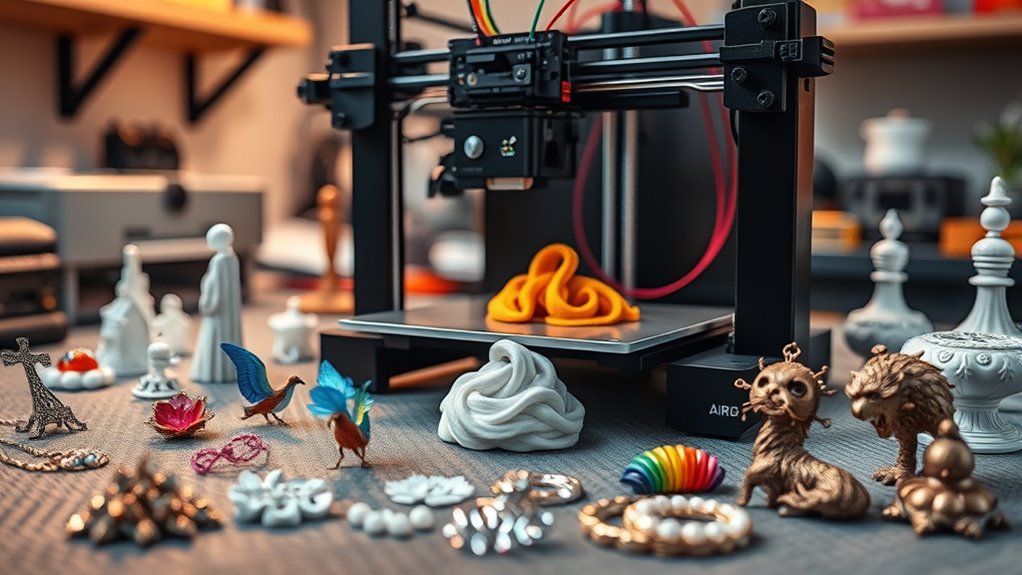
3D printing has revolutionized the way crafters bring their ideas to life by offering a versatile and accessible way to create custom designs. Whether you’re making jewelry, home decor, or intricate art pieces, 3D printing allows you to turn digital concepts into tangible objects with remarkable precision. One of the most critical steps in this process is material selection. Choosing the right filament or resin impacts not only the look and feel of your finished product but also its durability and functionality. For delicate jewelry, you might opt for resin or flexible filament, while for sturdy home accessories, ABS or PETG could be better choices. Your selection depends on the specific properties you need, such as flexibility, strength, or aesthetic appeal. It’s worth experimenting with different materials to find the ones that best align with your project goals.
Alongside material selection, design optimization plays a crucial role in successful 3D printing. This involves refining your digital model to ensure it prints accurately and efficiently. Design optimization helps you identify potential issues like overhangs, thin walls, or unsupported features that could cause print failures. Using slicing software, you can adjust wall thicknesses, infill density, and support structures to improve print quality and reduce material waste. It also enables you to streamline your design for faster printing, saving you time and resources. When you optimize your design, you consider not just how it looks but also how it will be built layer by layer. This foresight minimizes errors and enhances the overall strength and finish of your craft. Additionally, understanding the materials used in modern farmhouse decor, such as reclaimed wood and metal, can inspire you to incorporate similar textures and finishes into your 3D printed projects for a cohesive aesthetic.
Furthermore, integrating design optimization with material selection allows you to leverage the full potential of 3D printing. For example, if you’re working on a decorative piece that needs to be lightweight yet sturdy, you might select a filament with a high strength-to-weight ratio and tweak your design to incorporate internal supports or honeycomb structures. This combination ensures your project is both visually appealing and structurally sound.
Top picks for "print custom craft"
Open Amazon search results for this keyword.
As an affiliate, we earn on qualifying purchases.
Frequently Asked Questions
What Are the Best Materials for Intricate Craft Details?
For intricate craft details, you should choose materials that balance filament durability and detail resolution. Resin-based filaments, like photopolymer resins, excel at capturing fine details and offer smooth finishes, perfect for delicate designs. Alternatively, high-quality PLA or PETG filaments provide good durability while maintaining sharp detail resolution. Select your material based on whether you prioritize intricate detail or long-lasting, durable crafts, ensuring your project meets your specific needs.
How Long Does It Take to Complete a Complex Print?
It typically takes anywhere from several hours to over a day to complete a complex print, depending on your print speed and layer height. Faster print speeds and thicker layers shorten the process, but may reduce detail quality. For intricate craft details, you’ll want to balance these factors carefully. Expect longer times for highly detailed projects with fine layer heights, but remember, patience results in a more refined finished piece.
Can 3D Printed Crafts Be Safely Used Outdoors?
You can definitely use 3D printed crafts outdoors, especially if you choose weather-resistant and UV-stable materials; studies show these can last over five years outside. These materials resist fading, cracking, and deterioration caused by sun and rain, making your crafts durable. So, if you select the right filament, your creations will withstand outdoor conditions, ensuring they stay vibrant and intact for long-term display or use.
What Post-Processing Is Required After Printing?
After printing, you’ll want to use post-processing techniques to enhance your craft. Start by removing any support structures carefully, then sand rough edges for a smooth finish. You might also apply finishing touches like priming, painting, or sealing to improve appearance and durability. These steps guarantee your 3D printed creation looks polished and professional, making it it perfect for display or outdoor use.
Are There Eco-Friendly Filament Options Available?
You’ll be glad to hear eco-friendly filament options like biodegradable filaments and recycled plastics are widely available now. Coincidentally, choosing these materials helps reduce environmental impact while satisfying your creative urges. These options often produce less waste and are safer for the planet. So, when you print, you can enjoy your craft knowing you’re making a more sustainable choice. It’s an easy way to be eco-conscious and creative at the same time.
Conclusion
As you explore the world of 3D printing for your craft creations, remember that every masterpiece starts with a simple idea. While the journey may have its twists and turns, each step brings you closer to uncovering hidden potential. Embrace the process, knowing that even small setbacks are just gentle nudges guiding you toward greater mastery. Keep creating with passion, and you’ll find that your unique touch can turn everyday materials into something truly special.