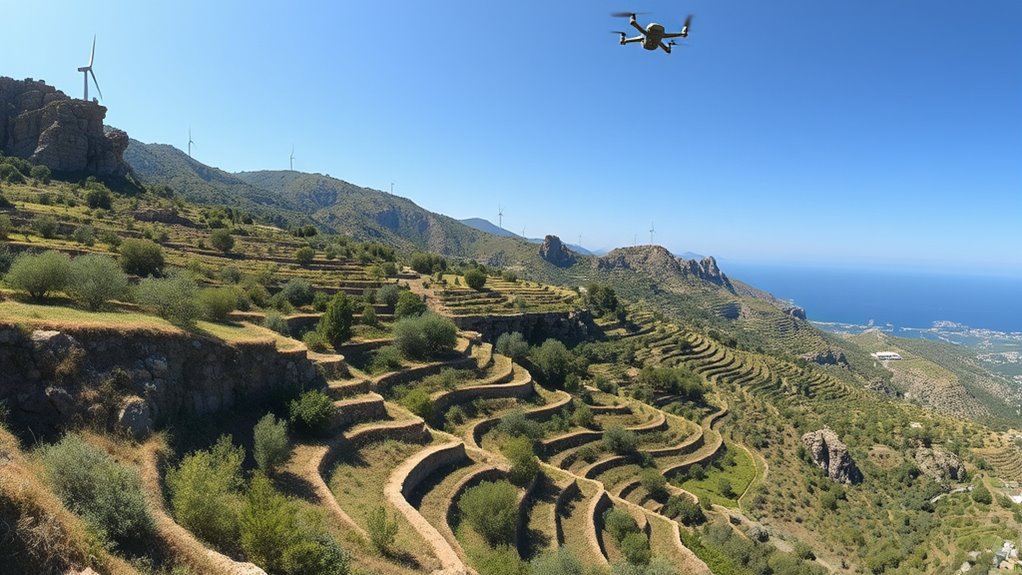

The future of agriculture in Sardinia looks promising as the sector combines traditional crops with innovative, sustainable practices. You’ll see more adoption of digital tools like smart irrigation, drones, and AI to boost efficiency and resilience against climate change. Farmers are also diversifying crops and focusing on organic farming to protect biodiversity. With ongoing policy support and community efforts, Sardinia aims for sustainable growth and climate adaptation—if you want a deeper understanding, there’s plenty more to explore.
Key Takeaways
- Emphasis on sustainable, organic farming practices to preserve soil health, biodiversity, and traditional crops amid climate challenges.
- Adoption of digital technologies and innovative irrigation to enhance efficiency and resilience against drought and extreme weather.
- Development of drought-resistant crop varieties and crop diversification to mitigate climate change impacts and ensure food security.
- Increased regional and EU support for renewable energy, infrastructure, and rural modernization to foster sector growth.
- Focus on environmental preservation and community engagement to balance economic development with biodiversity and ecosystem protection.
Sardinia’s Agricultural Heritage and Traditional Crops
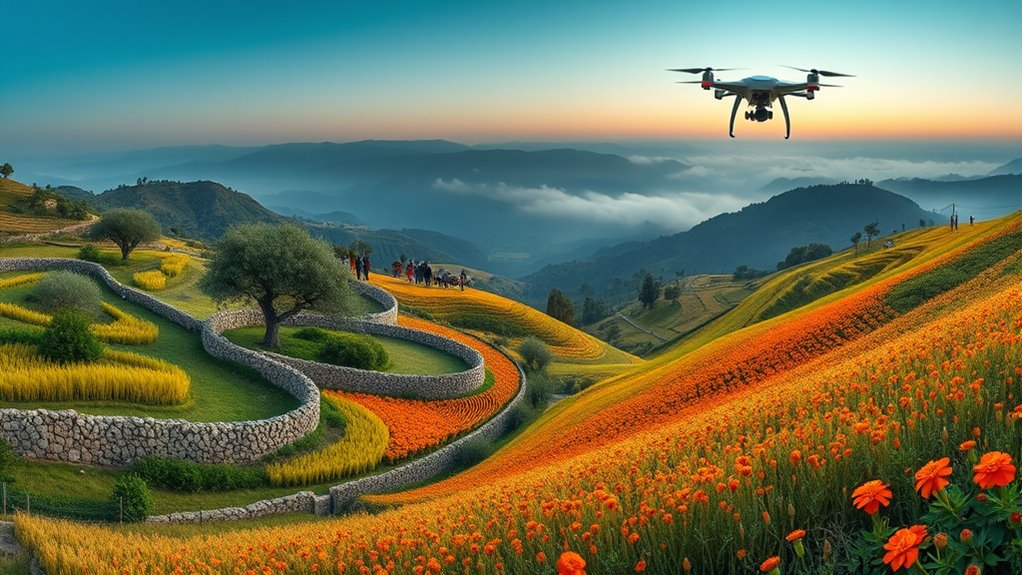
Sardinia’s rich agricultural heritage is rooted in the cultivation of traditional crops that have sustained communities for centuries. You’ll find ancient grains like spelt, emmer wheat, and barley, which preserve traditional flavors and nutrition. These crops are grown using sustainable methods such as organic compost and crop rotation, minimizing chemical use. Supporting both cultural identity and ecological health, these grains connect you to your ancestors’ farming practices. Annual crops include cereals like wheat and legumes like lentils and wild peas, while perennial crops feature regional specialties like the Sardinian Spiny Artichoke. Vineyards, olive trees, and fruit orchards further define Sardinia’s farming landscape. By maintaining these crops, you help preserve the island’s agricultural legacy, ensuring its traditions and biodiversity thrive for future generations.
Impact of Climate Change on Local Farming Practices
Climate change is making droughts more frequent and severe, directly threatening your crops and water supply. As yields decline and water resources shrink, you’ll need to consider new strategies to adapt. Addressing these challenges now is essential to protect Sardinia’s farming future. Rising temperatures further exacerbate water shortages and soil degradation, compounding the difficulties faced by local farmers. Implementing sustainable practices, such as water conservation techniques, can help mitigate some of these impacts and ensure the resilience of local agriculture.
Rising Drought Risks
As droughts become more frequent and severe due to climate change, farmers in Sardinia face mounting challenges in maintaining their livelihoods. The likelihood of intense droughts has increased by about 50%, with record-low rainfall and high temperatures drying soils and reducing water supplies. Water restrictions have cut irrigation by up to 30%, threatening crop viability and pasture growth. Many farmers are adapting by changing irrigation techniques or switching to drought-resistant crops, but adoption varies. Livestock farming also suffers from limited pasture, forcing changes in management. The table below highlights the main impacts:
| Impact | Consequence |
|---|---|
| Reduced water availability | Crop and pasture stress |
| Infrastructure limitations | Inefficient water distribution |
| Economic losses | €80 million in two years |
| Adaptation efforts | Variable technology adoption |
Furthermore, attention to sustainable practices is essential for long-term resilience in the face of ongoing climate challenges.
Crop Yield Declines
Rising temperatures and changing precipitation patterns directly threaten crop yields in Sardinia, forcing farmers to adapt their practices. Durum wheat yields are projected to drop by 2-6% by 2025 and up to 10-18% by 2075 without CO2 fertilization effects. Elevated temperatures accelerate crop development but cause heat stress, reducing yields and grain quality. Extreme weather, like severe droughts, further diminishes production, with some areas experiencing 70% yield losses. While increased CO2 can boost photosynthesis, its benefits are offset by disrupted weather patterns and soil degradation. Enhanced photosynthesis can temporarily improve plant growth under elevated CO2 levels, but the overall benefits are limited by other environmental stresses. To maintain productivity, farmers must consider earlier sowing dates, crop variety shifts, and improved water management. These changes are essential to combat the declining yields driven by climate change’s complex impacts. Climate change projections indicate that without adaptive measures, the long-term sustainability of Mediterranean agriculture could be severely compromised.
Adaptation Strategies Needed
To effectively address the challenges posed by climate change, Sardinian farmers must adopt innovative adaptation strategies that modify traditional practices. You should implement conservative agriculture techniques to reduce land degradation and preserve soil fertility, guaranteeing long-term productivity. Using genetic resources to develop crop varieties better suited for rising temperatures and unpredictable rainfall will help maintain yields, especially for durum wheat, crucial to your economy. Genetic resources have been identified that enhance crop resilience against climate change impacts. These resources can include drought-tolerant and heat-resistant varieties, which are vital for adapting to changing environmental conditions. Collaborating with policymakers and researchers ensures your farm adopts targeted, effective strategies to face climate uncertainties. Incorporating sustainable farming practices can further improve soil health and ecosystem stability, fostering increased resilience.
Modern Trends in Sustainable Agriculture
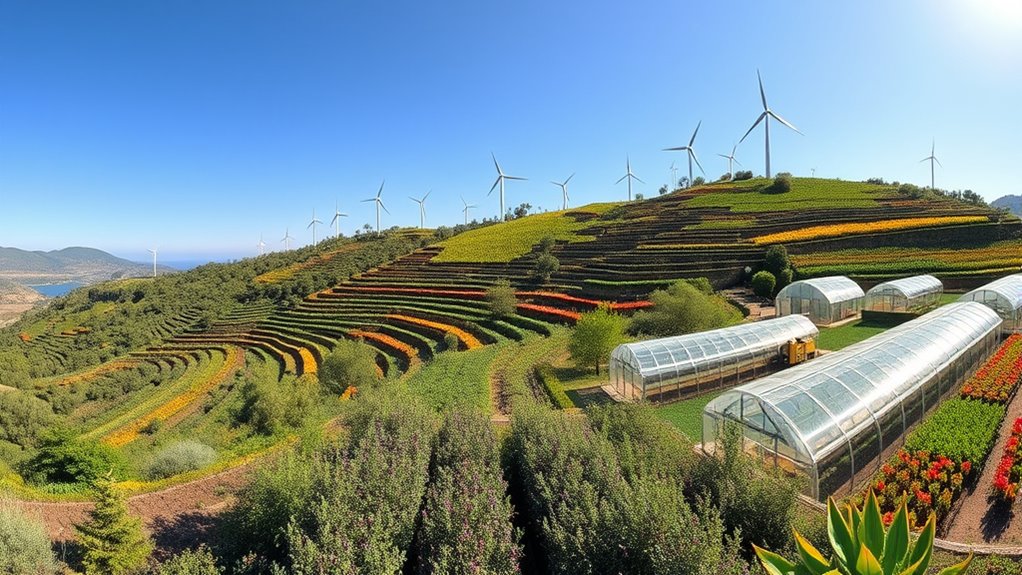
You’re seeing how digital farming technologies, like smart irrigation and crop monitoring, are transforming Sardinian agriculture to be more efficient and sustainable. Farmers are increasingly adopting eco-friendly practices, such as crop rotation and organic certification, to protect the environment and boost product quality. Implementing sustainable practices not only helps preserve natural resources but also enhances long-term farm profitability. Policy support initiatives further encourage this shift, providing resources and incentives to make sustainable farming the new norm. Additionally, the region is experiencing a rising trend in agroforestry, integrating trees with crops to enhance biodiversity and soil health which helps mitigate climate change impacts.
Digital Farming Technologies
Digital farming technologies are transforming agriculture in Sardinia by enabling you to make smarter, data-driven decisions. Platforms like xarvio® FIELD MANAGER give you real-time weather, soil, and crop data, helping you manage pests, diseases, and predict yields more accurately. Precision tools like GPS mapping ensure your machinery operates precisely, reducing overlaps and input waste. Drones with high-resolution cameras monitor crop health early, while soil sensors provide continuous data on moisture, nutrients, and temperature to optimize watering and fertilization. Satellite imagery combined with GIS helps tailor your activities to specific field zones, increasing efficiency. Training programs equip you with skills to operate sensors, drones, and data analysis tools, guaranteeing you can fully leverage digital solutions to boost productivity and sustainability on your farm. Incorporating juice extraction techniques can also provide insights into crop health and nutrient content, further enhancing your farm management strategies.
Eco-Friendly Practices Adoption
Adopting eco-friendly practices is gaining momentum among Sardinian farmers as they seek sustainable solutions that protect the environment and enhance farm productivity. Although organic farming remains below the national average, support programs like RDP Measure 11 nearly doubled enrollment from 2016 to 2021, showing increased commitment. Organic methods improve soil health by boosting carbon content and sequestering CO2, while maintaining high water quality at 79% of monitored sites. Farmers are adopting water-efficient technologies like drip irrigation and integrating renewable energy sources such as solar and wind. Agroecology initiatives promote crop and livestock diversification, supporting biodiversity and natural pest control. Community involvement through workshops and farm-to-table programs further encourages sustainable practices, strengthening Sardinia’s agricultural resilience and preserving its cultural heritage. Vetted sustainable practices are also being evaluated for their long-term economic benefits and impact on local ecosystems.
Policy Support Initiatives
Sardinia’s policy support initiatives are driving the region toward a more sustainable agricultural future by implementing targeted strategies and regulations. The ARSINOE Project aims to improve durum wheat sustainability through innovative methods, addressing climate challenges. The Suitable Areas Decree guides renewable energy installations, focusing on small-scale projects while protecting farmland from large photovoltaic plants, which are banned in agricultural zones. This regulation creates legal hurdles but ensures land remains dedicated to farming. Sardinia emphasizes enhancing local food infrastructure, including storage and processing, to boost food security and reduce reliance on imports. Additionally, policies promote clean energy use in irrigation and soil conservation practices to improve climate resilience. These initiatives support regional goals for economic growth, biodiversity protection, and alignment with EU standards. Incorporating electric bike initiatives can further promote sustainable transportation within agricultural communities, reducing emissions and supporting environmental goals.
Technological Innovations Reshaping Sardinian Farms
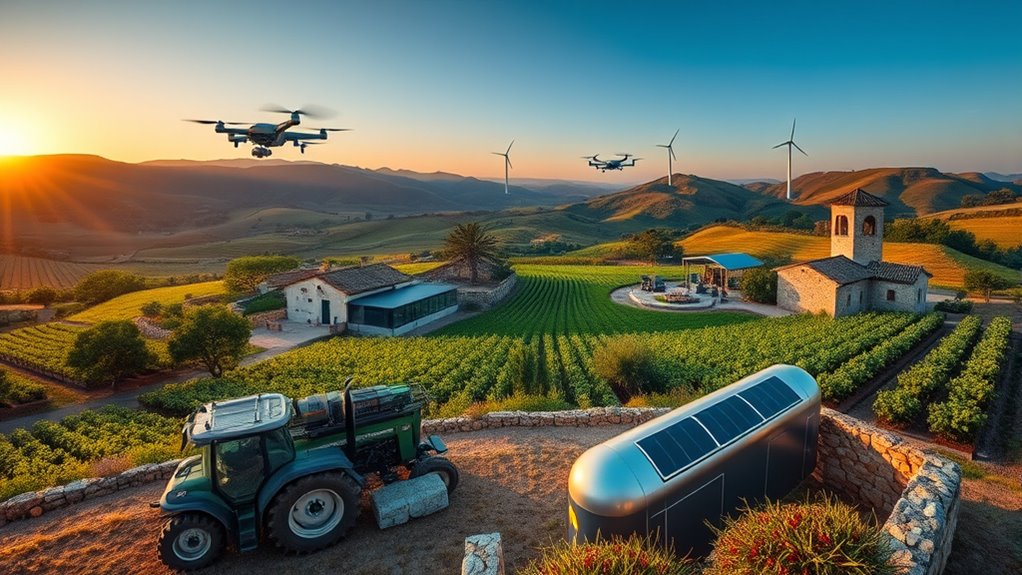
Technological innovations are transforming agriculture across Sardinian farms, making operations more efficient, sustainable, and data-driven. IoT sensors monitor soil moisture, nutrients, and microclimates, enabling precise resource use. They support early pest detection and targeted irrigation, reducing water use by up to 30%. GPS-enabled machinery gathers field data for variable fertilizer application, minimizing waste. Cloud platforms compile sensor data, optimizing planting and crop rotation. AI analyzes weather, soil, and crop health data to predict planting times and pest risks. Autonomous tractors and robots perform tasks with minimal human input, increasing safety and productivity. These advancements cut costs and emissions, fostering sustainable farming. Here’s a quick overview:
| Technology | Function | Impact |
|---|---|---|
| IoT & Sensors | Real-time monitoring, pest detection | Precision, water savings |
| AI & Data Analytics | Predictive insights, decision support | Increased yields, sustainability |
| Autonomous Machinery | Tillage, planting, harvesting | Efficiency, cost reduction |
Furthermore, data analytics platforms integrate sensor data with satellite imagery and weather forecasts, enhancing farmers’ ability to make informed decisions.
Economic Challenges and Opportunities in the Sector
Innovative technologies are offering new solutions for Sardinian agriculture, but the sector still faces significant economic hurdles that threaten its sustainability. Water scarcity, caused by severe droughts, limits irrigation and forces farmers to prioritize crops, risking failures and economic instability. Poor water management and bureaucratic delays worsen the crisis, while partial solutions like treated wastewater aren’t enough without exhaustive plans. Despite increased turnover, structural issues like fragmented land and high production costs restrict growth. Global crises and limited access to credit further hamper modernization efforts. Climate change intensifies droughts and land degradation, increasing costs and reducing yields. However, opportunities exist in sectors like sheep and goat farming, which remain essential and show growth potential. Water shortage and inadequate infrastructure further threaten the sector’s future, emphasizing the urgent need for comprehensive resource management and strategic investments. Addressing these challenges requires strategic investments and better resource management, including innovative irrigation techniques and sustainable practices.
Diversification: Introducing Emerging Crops
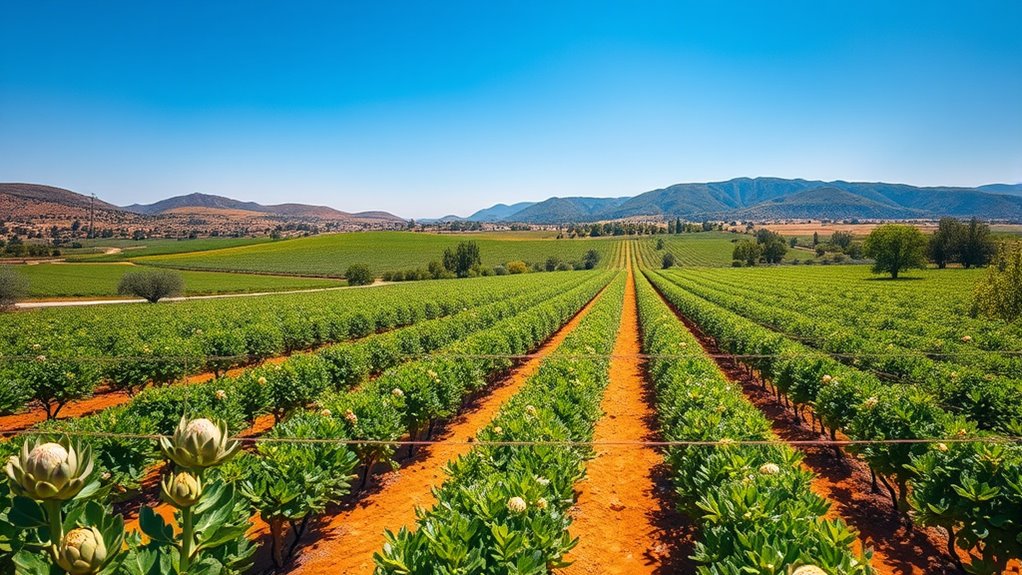
As climate conditions become more unpredictable, introducing emerging crops offers a strategic way to diversify Sardinian agriculture and increase resilience. Crops like quinoa thrive in Sardinia’s favorable climate and terrain, providing high-value alternatives to traditional cereals. Leguminous options such as lentils and wild peas add diversification beyond wheat and barley, while spiny artichokes serve as a resilient perennial crop of local importance. Aromatic plants and fruit trees, including olives and grapes, enhance biodiversity and support varied production. These emerging crops meet growing demand for health-conscious, premium foods, boosting income potential. By adopting sustainable irrigation, conserving soil fertility, and leveraging genetic resources, farmers can improve crop resilience. Emerging crops can also attract new markets and investment, fostering innovation in the region. Diversification helps reduce market and climate risks, promotes local economic growth, and aligns with broader sustainability goals.
Infrastructure and Financial Support for Farmers

Sardinia’s rural development efforts focus on strengthening infrastructure and providing financial support to farmers, addressing key barriers like high costs and logistical challenges. The Rural Development Programme (RDP) directs funds toward modernizing farms, improving water management, and reducing property fragmentation. Over €23.6 million from the EAFRD and regional funds support investments in innovative farm projects, especially for young farmers and organic farming. Financial mechanisms include temporary aid for farmers affected by COVID-19 and incentives for sustainable practices. Coldiretti Nord Sardegna fights for transport subsidies and infrastructure solutions to ease logistics. Initiatives like rural districts enhance market access and local food infrastructure, reducing reliance on imports. These measures aim to cut costs, improve efficiency, and boost long-term competitiveness in Sardinian agriculture. Agricultural companies’ turnover in Northern Sardinia more than doubled from 35 million euros in 2019 to 70 million euros in 2023, highlighting the sector’s resilience and growth potential, which underscores the importance of continued infrastructural and financial support.
Environmental Initiatives and Preservation Efforts
You can see Sardinia’s focus on sustainable farming practices and biodiversity preservation through initiatives like crop rotation and reduced chemical use. These efforts help protect ecosystems, maintain soil health, and support local biodiversity. By adopting such measures, you contribute to a resilient and environmentally friendly agricultural future. Sustainable practices also encourage the preservation of native plant and animal species, further strengthening ecological balance on the island.
Sustainable Farming Practices
Sustainable farming practices in Sardinia are increasingly focused on environmental initiatives that preserve natural resources and promote long-term land health. Despite organic farming covering less than 10% of total land, its area has grown by 30% over the past decade, showing rising adoption. Most land (80%) consists of pastures and fodder crops, encouraging specific sustainable practices like rotational grazing. Innovative techniques such as precision farming, integrated pest management, vertical farming, and hydroponics boost resource efficiency. Farmers are diversifying crops to improve resilience and reduce chemical inputs. Policy support, including EU funding and RDP measures, underpins this shift. As a result, water quality remains high, and soils show increased carbon content, contributing to soil fertility and climate mitigation efforts. Sardinia’s soil analysis confirms high nutrient levels, supporting diverse crop cultivation.
Conservation of Biodiversity
Efforts to conserve biodiversity in Sardinia focus on protecting rare and endangered species by maintaining and restoring natural habitats. You’ll find initiatives like the Sardinia Biodiversity project, which manages the Regional Directory of Agricultural Biodiversity to track native flora and fauna. Farmers and Guardian Breeders actively participate in in-situ conservation of local genetic resources, supporting germplasm banks that store seeds and genetic material for future restoration. Organic agriculture plays a key role, protecting soils and habitats while absorbing carbon. The region preserves wetlands, forests, and coastal areas by integrating farms into these ecosystems, promoting agroforestry and mixed land-use systems. EU funds support organic conversion and ecosystem management, with public-private partnerships further strengthening conservation efforts. These initiatives ensure Sardinia’s unique biodiversity remains resilient for future generations. Sardinia’s rich biodiversity is also protected through environmental education programs that raise awareness among local communities and visitors alike.
Building Resilience Through Policy and Community Engagement
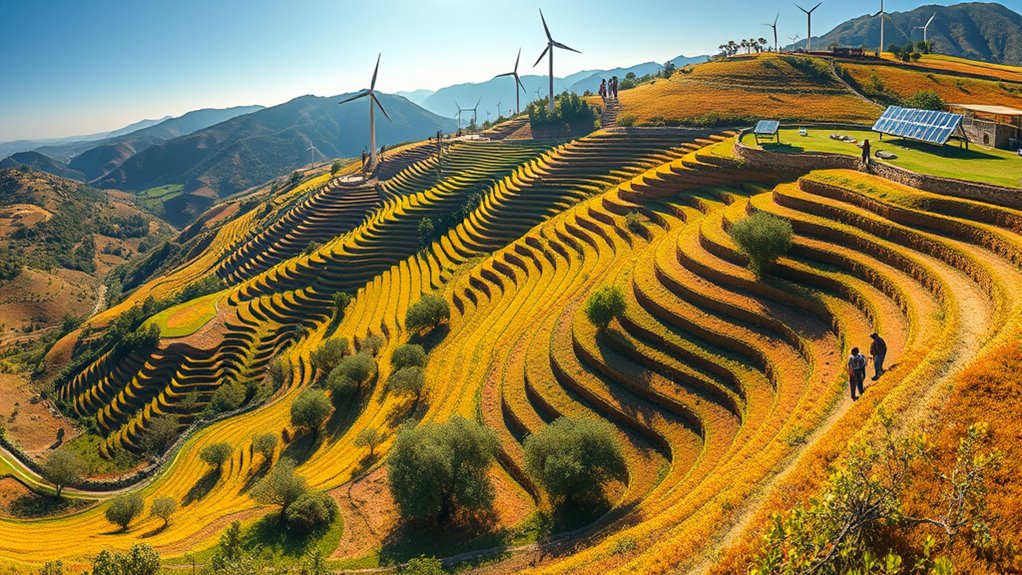
Building resilience in Sardinia’s agriculture relies heavily on effective policies and active community engagement. The ARSINOE project promotes sustainable irrigation and conservation farming, supporting key crops like durum wheat. Policies encourage using genetic resources and clean energy, reducing climate impact and stabilizing food supply. Regional efforts focus on soil preservation, lowering dependence on imports, and integrating climate adaptation into food infrastructure. Financial support, including a €3 billion credit line, targets young farmers and innovative businesses, fostering sector renewal.
| Policy Focus | Community Engagement | Environmental Balance |
|---|---|---|
| Sustainable irrigation | Multi-stakeholder collaboration | Renewable energy zoning |
| Soil preservation initiatives | Land use debates and mediation | Protecting agricultural land |
| Support for local crop resilience | Balancing development and community needs | Responsible infrastructure expansion |
Future Perspectives and Strategic Development Goals

Looking ahead, Sardinia’s agricultural sector is shaping its future through strategic development goals that aim to enhance resilience, boost economic growth, and foster sustainability. The ARSINOE project addresses climate challenges by promoting adaptation methods like conservation agriculture, sustainable irrigation, and genetic resource use, especially for durum wheat. Improving soil fertility and implementing clean energy-powered irrigation reduce environmental impacts and strengthen resilience. Strengthening local food infrastructure supports food security and lowers carbon footprints by decreasing reliance on imports. Economically, sectors like livestock, viticulture, and agritourism have doubled their turnover, driving regional growth. The Sardegna2030 strategy provides an extensive framework with clear targets for environmental protection, social inclusion, and economic equity. In addition, the strategy emphasizes the importance of fostering innovation and digitalization in agriculture to increase productivity and sustainability. To achieve these goals, proper funding and coordinated efforts across public and private sectors remain essential.
Frequently Asked Questions
How Will Climate Change Alter Sardinia’S Traditional Crop Varieties?
Climate change will considerably alter Sardinia’s traditional crop varieties. Rising temperatures and unpredictable rainfall will stress crops like olives, wheat, and grapes, reducing yields and quality. Droughts and heatwaves threaten crop survival, while pests and diseases become more prevalent. You’ll see shifts in planting seasons and a need to adopt resilient, drought-tolerant varieties. To adapt, farmers are diversifying and implementing sustainable practices to protect their heritage and guarantee future stability.
What Specific Technological Tools Are Being Adopted by Sardinian Farmers?
You’re witnessing a revolution in Sardinian agriculture, where advanced tools are transforming your farming experience. You’re using precision agriculture sensors and drones that seem to have superpowers, monitoring soil health and crop performance instantly. Farm management apps put the entire operation in your hands, while IoT devices give real-time environmental data. These innovations make farming smarter, easier, and more sustainable—unlocking a future where your land thrives like never before.
How Can Young Farmers Access Funding for Modernizing Agriculture?
You can access funding for modernizing agriculture through several initiatives. Italy offers state loans up to €1.5 million for land and €500,000 for education, plus bonuses. Sardinia’s programs support young farmers with grants and streamlined procedures, while new legislation provides tax benefits and co-financing. Additionally, partnerships with banks like Crédit Agricole offer dedicated credit lines, making it easier for you to invest in technology and expand your farm.
What Are the Environmental Impacts of Expanding New Crops Like Quinoa?
Think of expanding quinoa crops as planting new seeds in a fragile garden. You’ll see minimal water use due to its hardy nature, but beware of soil degradation and biodiversity loss if grown extensively. While it offers nutritional and economic benefits, monoculture risks can threaten ecosystems. Sustainable practices, like crop rotation and regenerative farming, help protect the environment, ensuring your new crop doesn’t become a weed choking out native diversity.
How Do Regional Policies Support Sustainable Agriculture Development?
You see, regional policies in Sardinia actively promote sustainable agriculture by offering financial incentives, technical support, and regulations that protect natural resources. They encourage eco-friendly farming practices, biodiversity, and water management. Through public awareness campaigns and community collaboration, these policies foster sustainable development. Cooperative models help strengthen local markets and reduce chemical use, ensuring farming remains viable while preserving the environment for future generations.
Conclusion
As you look to the future of Sardinian agriculture, it’s clear that embracing innovation and sustainability is key. Will you support policies and initiatives that protect this rich heritage while fostering growth? By working together—farmers, communities, and policymakers—you can help guarantee Sardinia’s agriculture remains resilient, vibrant, and sustainable for generations to come. The question is: are you ready to be part of this transformative journey?