
NFTs are changing digital art communities by giving you a way to prove ownership, showcase your work globally, and collaborate with artists from around the world. They break down traditional barriers, making it easier for you to participate, share ideas, and grow your network. Plus, transparent blockchain technology builds trust and authenticity in your art. Keep exploring, and you’ll discover how NFTs continue to shape innovative, inclusive, and connected digital art spaces.
Key Takeaways
- NFTs enable artists to showcase and sell digital art globally, expanding community engagement and visibility.
- Blockchain transparency fosters trust and verifiability within digital art communities.
- NFT platforms facilitate collaboration, co-creation, and shared projects among artists worldwide.
- Digital communities use social media and marketplaces to exchange ideas, feedback, and promote NFT art.
- Eco-friendly blockchain solutions support sustainable practices within NFT-driven art communities.
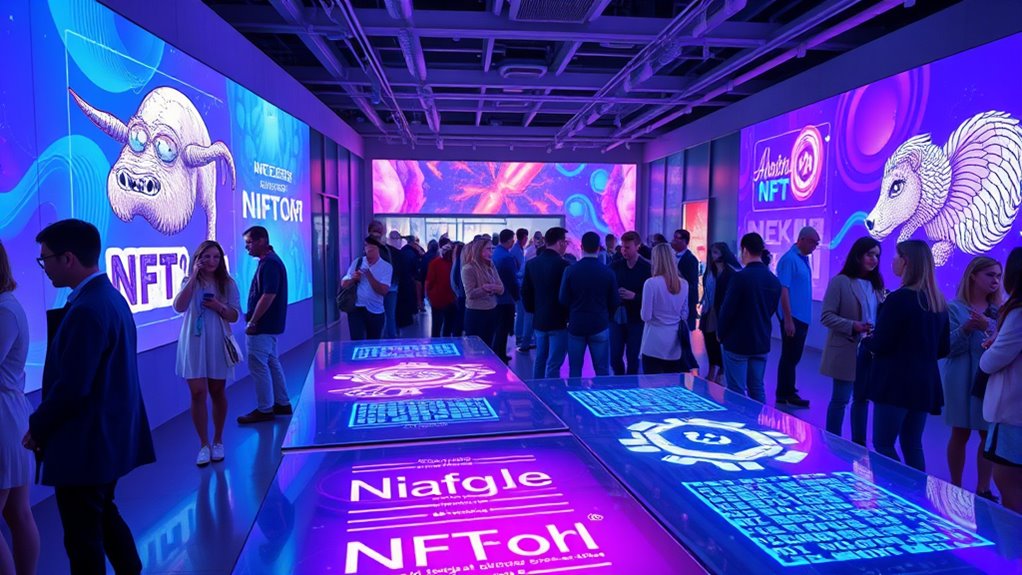
Have you ever wondered how NFTs are transforming digital art communities? At the core of this revolution is NFT minting, a process that allows artists to convert their digital creations into unique, tradable assets on the blockchain. When you mint an NFT, you’re essentially creating a one-of-a-kind token that guarantees ownership and provenance, making your art both verifiable and secure. This process has made it easier than ever to showcase your work globally, bypassing traditional galleries or auction houses. Instead, you can directly reach collectors and enthusiasts across the world, fostering a more inclusive and accessible art scene. NFT minting also encourages digital collaboration, as artists often work together on projects, sharing ideas and blending styles without geographical constraints. This collective approach fuels innovation, pushing boundaries and inspiring fresh, dynamic pieces that might never have come to life otherwise. Plus, digital collaboration within NFT communities creates opportunities for mentorship, skill-sharing, and co-creation, which strengthens the bonds among artists and collectors alike. As more creators participate, the community becomes a vibrant ecosystem where ideas and styles evolve rapidly, influenced by diverse perspectives. Additionally, the rise of eco-conscious blockchain solutions aims to reduce the environmental impact of NFT transactions, making digital art communities more sustainable.
This shift has democratized the art world, giving emerging artists a platform to gain visibility and monetize their work without needing traditional gatekeepers. When you participate in NFT minting, you’re not just creating art—you’re joining a movement that values originality and authenticity. The blockchain’s transparency guarantees that your work’s history is clear and unalterable, building trust among collectors who might have previously been hesitant to invest in digital art. Furthermore, NFTs facilitate ongoing digital collaboration, as artists can embed accessible content, exclusive access, or collaborative projects within their tokens. This interactivity deepens engagement, turning passive viewers into active participants. For collectors, owning an NFT becomes more than just holding a digital file; it’s about being part of a community that celebrates creativity and innovation.
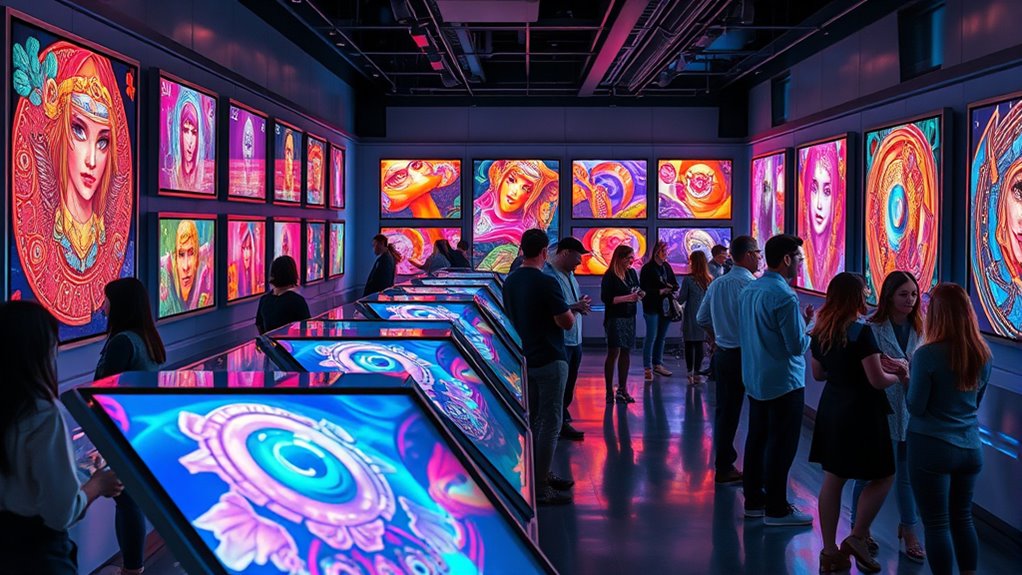
In this environment, artists and collectors often come together in online spaces such as Discord servers, social media groups, or dedicated marketplaces, where they exchange ideas, give feedback, and plan new projects. These digital communities thrive because of the ease with which NFTs can be minted and shared, creating an ecosystem where collaboration is seamless and rewarding. As you explore this space, you’ll notice how digital collaboration isn’t just a buzzword but a fundamental aspect of how art is created, shared, and appreciated in the NFT era. The ability to mint NFTs and work collaboratively accelerates artistic growth and broadens the scope of what’s possible in digital art communities.
Top picks for "nfts digital community"
Open Amazon search results for this keyword.
As an affiliate, we earn on qualifying purchases.
Frequently Asked Questions
How Do NFTS Affect Traditional Art Valuation?
NFTs markedly impact traditional art valuation by changing auction dynamics and collector behavior. You’ll notice more emphasis on digital provenance and rarity, which can elevate an artwork’s perceived worth. As collectors become more engaged with digital assets, they influence market trends and valuation standards. This shift encourages traditional artists and collectors to adapt, blending digital and physical art worlds, and ultimately reshaping how value is assigned in the art market.
What Legal Rights Do NFT Owners Have Over Digital Art?
Congratulations, you now own an NFT—sort of. Legally, your ownership rights mostly cover the digital token itself, not the underlying intellectual property or copyright of the art. So, you can’t reproduce, sell, or modify the artwork without permission. Think of it as owning a signed poster—you’re buying the right to display, not the rights to mass produce. Always check the license; otherwise, you’re just a proud digital collector.
Can Digital Art Communities Influence Mainstream Art Markets?
Yes, digital art communities can influence mainstream art markets through social influence and community engagement. When you actively participate, share ideas, and promote artists within these communities, you help shape trends and elevate digital art’s visibility. Your engagement encourages collectors and galleries to recognize digital artists, gradually integrating digital art into traditional markets. By fostering this interaction, you play a key role in transforming how mainstream audiences and institutions view digital art.
Are There Environmental Concerns Related to NFT Blockchain Technology?
It’s like living in 1999 and ignoring the environmental impact of your internet habits—you can’t. Blockchain technology for NFTs does raise environmental concerns, mainly due to high energy consumption and a significant carbon footprint. This means that as you buy or sell NFTs, you’re indirectly contributing to environmental strain. You should consider these factors and seek eco-friendly solutions to minimize your digital art’s environmental impact.
How Do NFT Royalties Work for Artists Over Time?
NFT royalties guarantee that artists earn from secondary sales through royalty structures, which automatically pay a percentage to you each time your work is resold. This system helps sustain your earnings over time, so you continue benefiting from your art’s value growth. As the marketplace evolves, these royalties can vary, but they’re designed to support ongoing artist earnings and give you a continuous stream of income from your creations.
Conclusion
You now see how NFTs are transforming digital art communities, fostering creativity and new connections. Did you know that over 80% of NFT artists report increased exposure and sales? This statistic shows how these digital assets are empowering artists worldwide. As you explore this space, remember that NFTs aren’t just collectibles—they’re reshaping how we create, share, and value art in the digital age. Embrace the change and stay connected to this innovative movement.