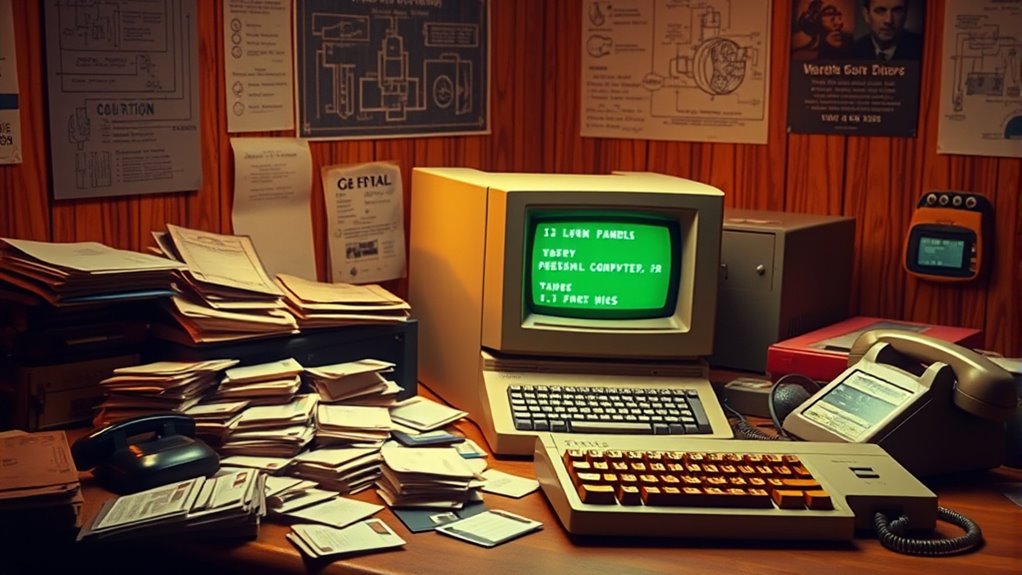
The digital revolution of 1975 marked the birth of the personal computer, transforming how you work, communicate, and access information. Companies like Apple made computers affordable and practical for individual use, opening new doors for innovation. Hardware advancements and easy-to-use software made these machines accessible to many, changing daily life forever. As technology continues to evolve, you’ll discover even more about how this pivotal event shaped our digital world.

Get travel and outdoor gear delivered free with Prime
- Fast, free delivery on millions of items
- Prime Video, Amazon Music and more included
- Member-only deals all year
Key Takeaways
- The 1975 Digital Revolution marked the emergence of affordable, compact personal computers for individual and small business use.
- Companies like Altair and Apple introduced pioneering hardware, enabling widespread access to computing power.
- Software innovations such as BASIC and graphical interfaces made computers more user-friendly and accessible.
- Hardware advancements improved speed, memory, and storage, allowing handling of complex tasks and diverse applications.
- This revolution transformed daily life, sparking innovation and embedding digital technology into homes and workplaces.

The Digital Revolution of 1975 marked a pivotal turning point in technology, transforming how we communicate, work, and process information. At the heart of this shift was the birth of the personal computer, a device that would eventually put the power of computing into your hands. This era was driven by rapid software innovation and hardware advancements that made computers more accessible and user-friendly. Previously, computers were large, expensive machines used only by large organizations or governments. But in 1975, pioneering companies like Altair and Apple introduced compact, affordable computers designed for individual use. These machines were powered by hardware advancements that shrank electronic components, making the computers smaller and more practical. You could now own a computer that fit on your desk or even in your home, revolutionizing how you approached tasks once reserved for specialists.
Software innovation played a vital role in this transformation. Developers created operating systems and programming languages that simplified user interaction, removing the need for complex machine code. Early software like BASIC and later graphical interfaces made computing more intuitive, allowing you to learn, explore, and utilize your computer without extensive technical knowledge. The software ecosystem began to grow rapidly, offering tools for word processing, spreadsheets, and even games, which broadened the appeal of personal computers. As hardware improved, such as faster processors, increased memory, and better storage options, the performance of these machines soared, enabling more complex software to run smoothly. These hardware advancements meant that your computer could handle increasingly demanding tasks, from managing databases to designing graphics. Furthermore, the development of integrated circuits significantly boosted processing power and miniaturization, accelerating the evolution of personal computers.
You start to see the implications of this revolution in your daily life. Tasks that once required a visit to specialized centers or the use of large, costly machines became manageable at home or in small offices. The combined progress in hardware and software meant that personal computers could perform a variety of functions, from simple calculations to complex data analysis. This accessibility sparked a wave of innovation, opening doors for entrepreneurs, students, and hobbyists to experiment, learn, and create. The personal computer’s advent marked the beginning of a digital era in which technology became more embedded in everyday life. You’re now part of a world shaped by these early innovations, where constant hardware advancements and software innovation continue to push the boundaries of what’s possible in computing.
As an affiliate, we earn on qualifying purchases.
Frequently Asked Questions
Who Were the Key Innovators Behind the First Personal Computers?
You should know that microprocessor pioneers like Intel’s Ted Hoff and Robert Noyce played vital roles in creating the first personal computers. Hardware innovators such as Steve Wozniak and Steve Jobs also made significant contributions, designing user-friendly devices that revolutionized computing. These pioneers combined their expertise to develop affordable, powerful personal computers that transformed how people work and communicate today.
How Did the Digital Revolution Impact Global Economies?
Like a lightning bolt, the digital revolution sparked rapid economic transformation across the globe. You see, technological advancements reshaped industries, created new markets, and boosted productivity. Countries that embraced these changes gained competitive edges, while others struggled to keep up. This shift led to job creation in tech sectors and increased consumer access. Overall, the digital revolution profoundly altered global economies, making them more interconnected, innovative, and dynamic.
What Were the Major Technical Challenges Faced in 1975?
In 1975, you faced major technical challenges like improving chip manufacturing processes, which needed higher precision and miniaturization, and developing reliable software that could run on emerging hardware. You had to overcome limitations in transistor technology and guarantee compatibility across different systems. These hurdles slowed progress but pushed innovations in chip design and software development, laying the foundation for the personal computers that would soon transform society.
How Did Early Personal Computers Influence Modern Technology?
Think of early personal computers as the seeds that grew into today’s tech jungle. They sparked software evolution, making programs smarter and more user-friendly. Their simple user interfaces laid the groundwork for intuitive designs we now take for granted. You benefit from this legacy every time you tap a touchscreen or run an app, connecting you to a digital world that started with those first pioneering machines.
Were There Any Significant Cultural Shifts Associated With the Revolution?
You experienced significant cultural shifts during the digital revolution, especially with social media transforming how you communicate and connect. It also influenced fashion trends, making them more fast-paced and globally inspired. As personal computers became common, you found yourself more engaged online, shaping your social life and style choices. These changes fostered a more interconnected world where digital culture influences everyday habits and cultural norms.
As an affiliate, we earn on qualifying purchases.
Conclusion
Just like a spark that ignites a fire, the digital revolution of 1975 transformed your world forever. With the birth of the personal computer, you now hold a powerful tool in your hands, opening doors to endless possibilities. This revolution didn’t just change technology—it changed how you connect, learn, and create. Embrace this legacy, knowing that you’re part of a story that continues to shape your life, bright and full of potential like a star in the night sky.
early personal computer software
As an affiliate, we earn on qualifying purchases.
As an affiliate, we earn on qualifying purchases.
computer programming for beginners
As an affiliate, we earn on qualifying purchases.
As an affiliate, we earn on qualifying purchases.
Halloween Picks
halloween
As an affiliate, we earn on qualifying purchases.