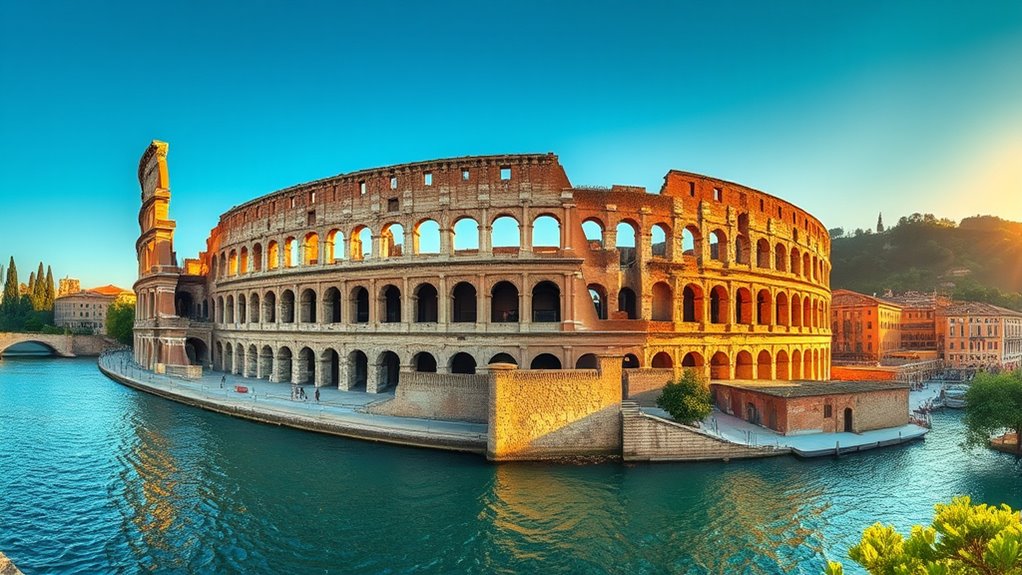

Italy’s UNESCO World Heritage Sites are must-see wonders that highlight its rich history, from ancient Roman ruins like Pompeii to medieval castles and Renaissance cities such as Florence and Venice. These sites let you walk through centuries of culture, architecture, and art, offering unforgettable experiences. Exploring these treasures reveals Italy’s layered past and vibrant heritage. If you keep exploring, you’ll uncover even more fascinating stories behind each of these iconic locations.
Key Takeaways
- Italy’s UNESCO World Heritage Sites showcase its rich history, including ancient Roman ruins, medieval structures, and Renaissance cities.
- Key sites include Pompeii, Herculaneum, and Etruscan archaeological remains, offering glimpses into early civilizations.
- Venice, Florence, and other cities feature iconic Gothic, Renaissance, and medieval architecture.
- Italy’s UNESCO sites reflect diverse cultural landscapes, from fortified castles to historic city centers.
- Visiting these sites provides an immersive experience into Italy’s layered historical and architectural heritage.
Italy boasts an impressive array of UNESCO World Heritage Sites, reflecting its rich history, diverse culture, and stunning architecture. As you explore these sites, you’ll find yourself immersed in centuries of history, from the grandeur of ancient civilizations to the intricate beauty of medieval craftsmanship. One of the most enthralling aspects of Italy’s heritage is its medieval architecture, which vividly tells the story of its medieval past. Picture walking through narrow cobblestone streets lined with stone-built churches, fortified towers, and well-preserved city walls. These structures reveal a time when cities were fortified for protection, yet they also showcase the artistic and engineering skills of the era. You’ll marvel at the detailed facades, pointed arches, and battlements that have withstood the test of time, offering a glimpse into medieval life and its complex social fabric.
In addition to medieval architecture, Italy’s ancient ruins are an awe-inspiring evidence to its ancient civilizations. Think about wandering through the ruins of Pompeii or Herculaneum, where preserved streets, villas, and forums transport you back to Roman times. These ancient sites give you a rare opportunity to walk where Romans once walked, observing their daily life, art, and engineering ingenuity. The grandeur of the Roman amphitheaters, temples, and baths still echoes the empire’s influence, while the remnants of the Etruscan civilization in northern Italy reveal an even older history that predates Rome. When you visit these ancient ruins, you’re not just observing old stones; you’re experiencing the stories of those who built and inhabited these spaces centuries ago.
Italy’s UNESCO sites also include cities like Venice, with its unique blend of Gothic and Renaissance architecture, and Florence, where art and architecture flourished during the Renaissance. Yet, it’s the combination of medieval structures and ancient ruins that truly captures the essence of Italy’s layered history. As you move from one site to another, you’ll appreciate how each era’s architecture and archaeological remains intertwine, creating a living narrative of Italy’s past. Whether you’re marveling at a medieval castle overlooking the countryside or exploring the ruins of an ancient Roman forum, these UNESCO sites provide a compelling journey through time. They invite you to connect with history in a way that’s both educational and inspiring, making your visit to Italy an unforgettable experience of discovery.
Cividale del Friuli Chronicles 2026: Hidden Gems Travel Guide: Bridges, Heritage & Northern Italy’s Soul
As an affiliate, we earn on qualifying purchases.
As an affiliate, we earn on qualifying purchases.
Frequently Asked Questions
How Are UNESCO Sites in Italy Selected and Designated?
You can understand that UNESCO sites in Italy are selected through a detailed criteria process. States submit nominations, and experts evaluate them based on heritage criteria like cultural significance, authenticity, and integrity. If a site meets these standards, it’s recommended for designation. The World Heritage Committee then reviews and formally designates the site, ensuring it preserves exceptional universal value for future generations.
Are There Any UNESCO Sites in Italy That Are Still Being Debated?
Yes, some UNESCO sites in Italy are still debated due to controversial nominations and site boundary disputes. You might find discussions around sites like the Amalfi Coast or certain historic districts, where boundaries or significance are questioned. These debates can delay or complicate the designation process, making it essential for authorities to address concerns and reach consensus before final recognition. Stay updated on official UNESCO communications for the latest developments.
What Are the Conservation Challenges Faced by Italian UNESCO Heritage Sites?
You should know that Italy’s UNESCO sites face serious conservation challenges, with over 70% affected by urban development and pollution. Climate change worsens these issues by causing erosion, flooding, and temperature fluctuations that threaten historic structures. You must act quickly to support preservation efforts, as balancing modernization with protection is essential to maintaining Italy’s cultural heritage for future generations.
Can Visitors Access All Areas of Italy’s UNESCO World Heritage Sites?
You can’t access all areas of Italy’s UNESCO World Heritage Sites, as visitor access is often limited to protect the sites’ preservation. Authorities balance allowing visitors to experience these wonders with conservation needs, so some sensitive areas are off-limits or require guided tours. This guarantees you enjoy the sites while helping to preserve their integrity for future generations. Always check access restrictions before your visit to make the most of your experience responsibly.
How Do UNESCO Sites in Italy Influence Local Communities and Economies?
You’ll notice that UNESCO sites in Italy boost local economies by attracting tourists, providing a significant local economic boost. They also strengthen community identity, as residents take pride in their heritage and share stories that preserve their culture. This tourism-driven growth encourages local businesses, creates jobs, and promotes sustainable development, making these sites essential to both the economy and the cultural fabric of Italian communities.

COLOSSEUM Travel Guide 2026-2027: The Complete First-Time Visitor Guide to Ancient Rome, the Colosseum, Roman Forum, Palatine Hill, Tickets, Hidden … Tips for a Smart and Memorable Visit.
As an affiliate, we earn on qualifying purchases.
As an affiliate, we earn on qualifying purchases.
Conclusion
As you wander through Italy’s UNESCO Heritage sites, you’re strolling through a living tapestry of history and beauty. Each site is a shimmering jewel in Italy’s crown, inviting you to uncover stories etched in stone and whispers of the past. Let these wonders ignite your imagination and fill your soul with awe. Remember, every step you take here is like turning a page in a timeless storybook, forever etched in the heart of your adventure.

Frances Mayes Always Italy
As an affiliate, we earn on qualifying purchases.
As an affiliate, we earn on qualifying purchases.

ArtDirect Examples of Architecture of Venice – The Ducal Palace, Renaissance Capitals of The Loggia (1887) 9×14 UnFramed Museum Art Print Poster Ready for Framing by John Ruskin
Artist: John Ruskin (English, 1819-1900)
As an affiliate, we earn on qualifying purchases.
As an affiliate, we earn on qualifying purchases.