
To practice zero-waste cooking, focus on proper storage methods like airtight containers and vacuum sealers to extend ingredient freshness. Use scraps for making broths or compost them to reduce waste. Preserve seasonal produce through freezing, dehydrating, or canning, and try fermenting vegetables for added flavor and probiotics. By adopting these techniques, you’ll reduce waste and save money—plus, you’ll discover even more simple ways to make your kitchen more sustainable.
Key Takeaways
- Use airtight containers, vacuum sealers, and repurposed jars to store leftovers and produce, extending freshness and reducing waste.
- Freeze seasonal fruits and vegetables to preserve them for long-term use and minimize spoilage.
- Incorporate fermentation, such as making sauerkraut or kimchi, to enhance food longevity and boost probiotic intake.
- Compost food scraps like peels, coffee grounds, and eggshells to reduce landfill waste and create nutrient-rich soil.
- Practice mindful portioning and plan meals to minimize leftovers, then repurpose or preserve excess food creatively.
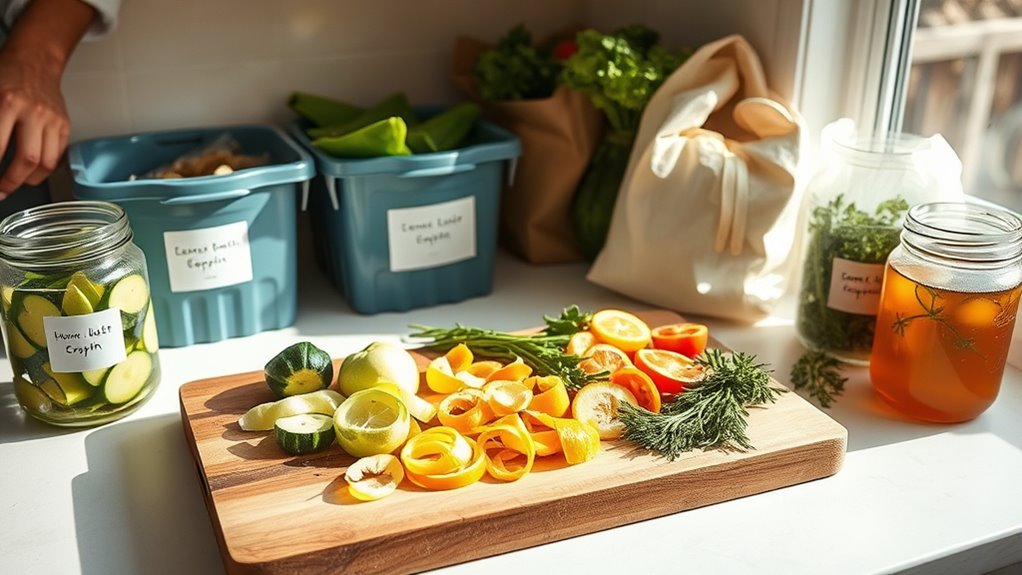
Ever wondered how to reduce food waste while still enjoying delicious home-cooked meals? The key lies in mastering simple strategies like food preservation and composting techniques. When you focus on extending the life of your ingredients, you not only save money but also minimize the amount of waste heading to the landfill. Start by learning how to properly store your produce, dairy, and leftovers. Using airtight containers, vacuum sealers, or even repurposing jars can keep your food fresh longer. For fruits and vegetables that are nearing their prime, consider freezing or dehydrating them. Freezing is an easy way to preserve seasonal fruits and vegetables so you can enjoy them months later, while dehydrating helps you create snacks or ingredients for future recipes.
Food preservation doesn’t just stop at freezing and dehydrating. Canning and pickling are excellent methods to extend your harvest’s lifespan, especially if you buy in bulk or grow your own produce. These techniques allow you to enjoy the flavors of fresh ingredients long after the season ends. Additionally, fermenting foods like sauerkraut or kimchi can boost your gut health and reduce waste by transforming simple vegetables into probiotic-rich delights. When you adopt these preservation methods, you’re actively reducing the likelihood of food spoiling before you get to enjoy it.
As you cook and store your meals, it’s equally important to implement composting techniques to handle scraps and peels responsibly. Composting is a natural process that turns organic waste into nutrient-rich soil, helping you close the loop in your food cycle. You can start small with a countertop compost bin or a backyard compost pile, depending on your space. Collect vegetable peels, coffee grounds, eggshells, and other compostable waste, and regularly turn or aerate your compost to speed up the process. Over time, you’ll produce healthy compost that can nourish your garden or houseplants, reducing the need for synthetic fertilizers. Incorporating food preservation and composting techniques into your routine makes your cooking more sustainable and eco-friendly. You’ll find yourself less overwhelmed by leftovers, and you’ll gain a sense of accomplishment knowing you’re making a positive impact on the environment. Every step, from properly storing your ingredients to composting scraps, helps you create a more zero-waste kitchen. With a little planning and effort, you can enjoy home-cooked meals without guilt, all while helping to preserve our planet’s resources.
Top picks for "zero waste cook"
Open Amazon search results for this keyword.
As an affiliate, we earn on qualifying purchases.
Frequently Asked Questions
How Do I Start Reducing Kitchen Waste Effectively?
Start by meal planning to reduce impulse buys and food waste. Create a shopping list based on your plan and stick to it, avoiding single-use packaging. Use reusable bags and containers to carry your groceries. Practice mindful shopping tips like buying in bulk and choosing package-free items. Store leftovers properly and compost food scraps when possible. These steps help you cut waste and make your kitchen more sustainable.
What Are the Best Tools for Zero-Waste Cooking?
You should invest in reusable containers and compost bins for zero-waste cooking. Reusable containers help store leftovers and bulk items, reducing packaging waste. Compost bins allow you to compost vegetable scraps, coffee grounds, and other organic waste, keeping it out of landfills. These tools make it easier to minimize waste daily, support sustainability, and streamline your efforts toward zero-waste cooking at home.
How Can I Store Leftovers to Prevent Spoilage?
Think of your leftovers like treasures that need safeguarding. Store them in airtight containers to keep out air and bacteria, extending freshness. Label each container with the date so you know what to enjoy first, like a wise captain managing their ship’s supplies. Proper storage prevents spoilage and waste, making your kitchen more eco-friendly. With these simple steps, you’ll make your leftovers last longer while reducing waste.
Are There Specific Recipes for Zero-Waste Meal Planning?
You can make zero-waste meal planning easier by exploring recipes that focus on ingredient substitutions and versatile ingredients. Use meal prep strategies like batch cooking and repurposing leftovers to minimize waste. Look for recipes that utilize whole ingredients, peels, stems, and scraps creatively. This way, you reduce waste, save money, and enjoy delicious, sustainable meals tailored to your pantry and preferences.
How Can I Compost Food Scraps at Home Easily?
Did you know that Americans throw away about 30% of their food? To compost food scraps easily at home, start with simple composting methods like using a bin outdoors or a countertop compost container. You can recycle food scraps such as vegetable peels and coffee grounds, turning waste into nutrient-rich soil. Regularly turn your compost and keep it moist to speed up food scrap recycling and maintain healthy decomposition.
Conclusion
By embracing these zero-waste cooking tips, you’re not just saving food—you’re saving the planet, one meal at a time. Think of your kitchen as a modern-day apothecary, where every scrap has value and purpose. With each mindful choice, you’re turning your home into a sanctuary of sustainability, much like the humble farmers of yore who cherished every harvest. So, roll up your sleeves and cook with love—your future self and the Earth will thank you.