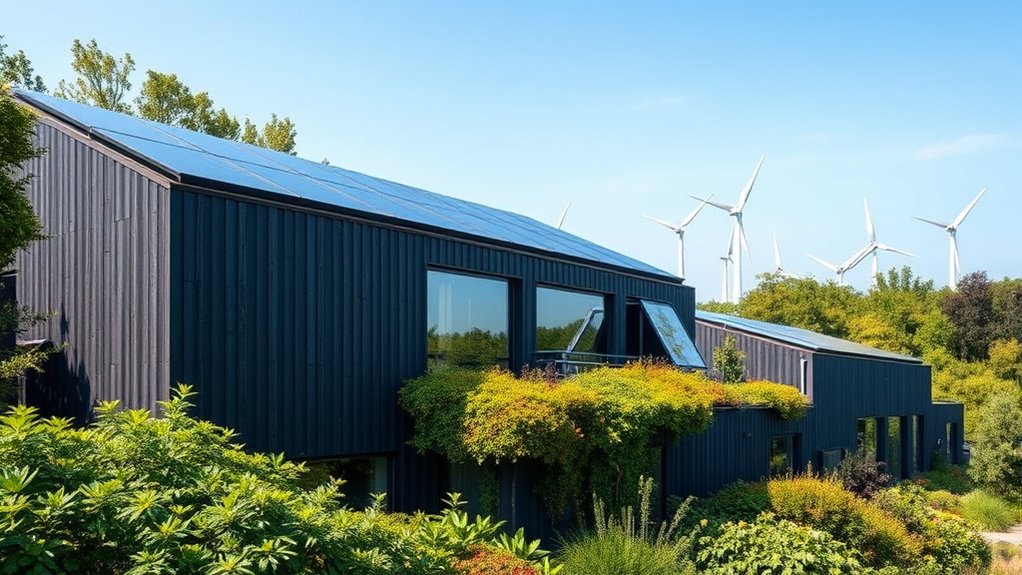

Using carbon-negative materials helps you build a more sustainable future by actively removing CO₂ from the atmosphere. These materials, like bio-based composites, are made from renewable resources that lock in carbon during growth. When used in construction and products, they lower environmental impacts and can even turn industries into carbon sinks. If you keep exploring, you’ll discover how innovative approaches are shaping a greener, more resilient world.

Get travel and outdoor gear delivered free with Prime
- Fast, free delivery on millions of items
- Prime Video, Amazon Music and more included
- Member-only deals all year
Key Takeaways
- Carbon-negative materials actively remove more CO₂ from the atmosphere during production and use, helping mitigate climate change.
- Bio-based composites made from renewable resources sequester carbon during growth, reducing overall environmental impact.
- Incorporating carbon sequestration techniques into manufacturing enhances the long-term carbon storage of building materials.
- Using biodegradable and renewable materials supports circular economy principles and lowers greenhouse gas emissions.
- Development and adoption of carbon-negative materials enable industries to build sustainably and transform into carbon sinks.

Have you ever wondered if it’s possible to create materials that actually reduce the amount of carbon dioxide in the atmosphere? The answer lies in innovative approaches like bio-based composites and carbon sequestration. These materials hold the promise of transforming industries by not just minimizing environmental impact but actively pulling CO₂ out of the air. Imagine building with substances derived from renewable biological sources that, during their growth, absorb carbon dioxide through photosynthesis. When crafted into bio-based composites, these materials become part of a circular process—reducing reliance on fossil fuels and lowering greenhouse gas emissions. This approach allows us to turn natural resources into durable, functional products while simultaneously sequestering carbon, helping slow climate change.
Bio-based composites are especially promising because they’re made from renewable materials like plant fibers, agricultural waste, or other organic substances. During plant growth, these materials capture CO₂ from the atmosphere, effectively locking it away in their structure. When used in construction, packaging, or automotive parts, they retain that sequestered carbon, preventing it from re-entering the atmosphere. Unlike traditional plastics or composites that rely heavily on fossil fuels, bio-based options are biodegradable and have a much smaller carbon footprint. By selecting these materials, you’re contributing to a system where carbon is stored long-term in durable products, turning industries into carbon sinks rather than sources. Additionally, integrating carbon sequestration techniques into manufacturing processes enhances the overall environmental benefits, ensuring more CO₂ is removed than emitted during the lifecycle of these materials.
bio-based composite building materials
As an affiliate, we earn on qualifying purchases.
As an affiliate, we earn on qualifying purchases.
Frequently Asked Questions
How Do Carbon-Negative Materials Compare Cost-Wise to Traditional Materials?
You’ll find that carbon-negative materials often have a higher initial cost compared to traditional options. However, the cost comparison improves as market adoption grows, making them more affordable over time. Plus, their environmental benefits can offset expenses through energy savings and potential incentives. As demand increases, these sustainable materials are becoming more economically competitive, encouraging broader adoption and helping you build greener, more cost-effective projects in the long run.
What Are the Main Challenges in Scaling up Production?
Rome wasn’t built in a day, and scaling up carbon-negative materials faces hurdles like supply chain logistics and quality assurance. You’ll need to streamline sourcing, guarantee consistent quality, and invest in manufacturing infrastructure. These challenges are significant, but with careful planning and innovation, you can overcome them. Addressing these issues early on helps ensure the materials meet sustainability goals while maintaining performance and cost-effectiveness as production grows.
Are Carbon-Negative Materials Suitable for All Building Types?
You might find that carbon-negative materials aren’t suitable for all building types due to their limited material versatility. While they excel in sustainable projects, structural limitations can arise in large, load-bearing applications or complex designs. It’s essential to assess each project’s specific needs, considering whether these eco-friendly materials can meet safety and performance standards. In some cases, combining them with traditional materials offers the best balance of sustainability and structural integrity.
How Long Do Carbon-Negative Materials Typically Last?
You’ll find that carbon-negative materials typically last as long as traditional building materials, thanks to durability assessments that evaluate their resilience. However, degradation factors like environmental exposure or moisture can affect their lifespan. To guarantee longevity, you should consider these factors during installation and maintenance. Proper care and selection based on durability assessments help maximize their lifespan, making them a sustainable choice for your projects.
What Are the Environmental Impacts of Harvesting Raw Materials?
Imagine you’re back in the Renaissance, but today, harvesting raw materials can cause biodiversity loss and resource depletion. When you extract these materials, you risk damaging ecosystems and reducing species variety. This environmental impact not only harms nature but also accelerates resource exhaustion, making it harder to sustain future needs. You should consider eco-friendly options that minimize these effects, ensuring a healthier planet for generations to come.
carbon-negative construction materials
As an affiliate, we earn on qualifying purchases.
As an affiliate, we earn on qualifying purchases.
Conclusion
Just as Prometheus brought fire to humanity, you can now bring innovation to our planet with carbon-negative materials. By choosing sustainable options, you’re not just building structures—you’re shaping a future where our footprints are lighter than ever. Embrace this revolution, and become a hero in the story of Earth’s renewal. The power is in your hands to turn the tide, forging a legacy of progress that echoes beyond today into a greener tomorrow.
biodegradable renewable building supplies
As an affiliate, we earn on qualifying purchases.
As an affiliate, we earn on qualifying purchases.
As an affiliate, we earn on qualifying purchases.
Halloween Picks
halloween
As an affiliate, we earn on qualifying purchases.