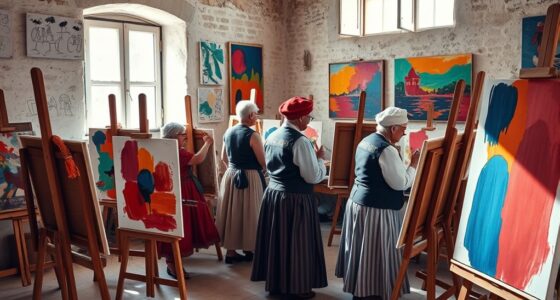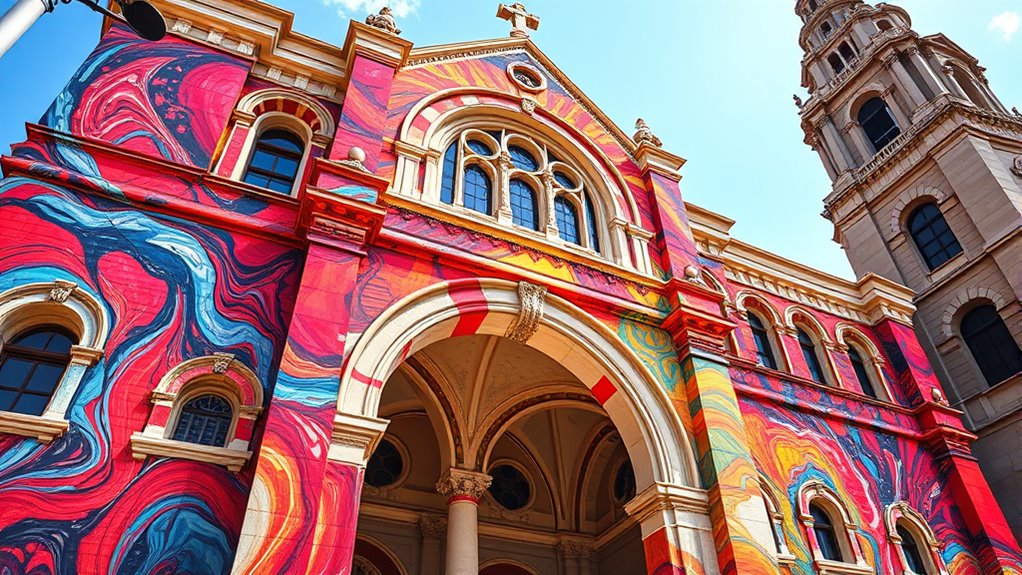
Interdisciplinary art that merges architecture and painting transforms public spaces into immersive, dynamic environments. By combining functional buildings with vibrant visuals, you can create engaging experiences that respond to community events and natural changes. Digital media enhances this fusion with interactive, real-time visuals, fostering connection and storytelling. These innovative projects push traditional boundaries, making art accessible and participatory. To discover how these creative collaborations continue to evolve, explore the exciting possibilities ahead.
Key Takeaways
- Combining architecture and painting creates dynamic environments that blend functional design with visual storytelling.
- Digital media enhances this fusion by enabling real-time, interactive projections on architectural surfaces.
- These interdisciplinary projects foster community engagement through participatory digital artworks integrated into public spaces.
- Merging these art forms allows for embedding cultural narratives and social messages within physical structures.
- The approach transforms traditional static art into immersive, evolving experiences that inspire and connect communities.
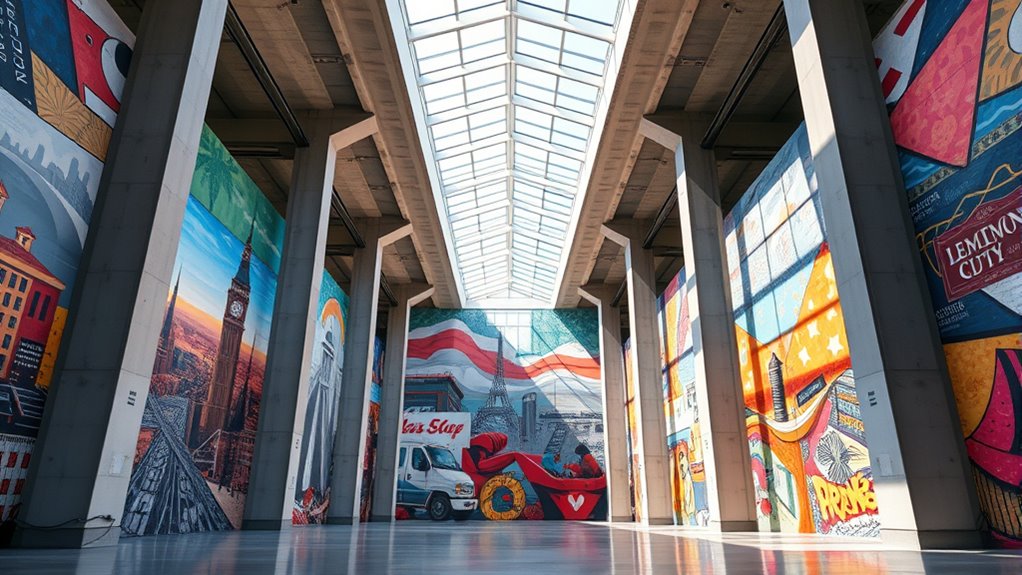
Have you ever wondered how combining different art forms can create something entirely new and exciting? When you merge architecture and painting, you open up a world of possibilities that transform public space into immersive experiences. This interdisciplinary approach allows artists and designers to craft environments that are not only functional but also visually compelling, engaging viewers on a deeper level. In today’s digital media landscape, these collaborations gain even more potential, as technology enables dynamic, interactive public spaces that respond to viewers’ movements and inputs. You can see how digital media becomes a bridge between static architecture and the fluidity of painting, resulting in environments that change and evolve in real time.
Imagine walking through a city square where the building facades are not just structural elements but serve as canvases for digital projections. These projections can animate the architecture, creating murals or abstract visuals that shift with the time of day or community events. By integrating digital media into public space, artists can enhance the sensory experience, making each visit unique and memorable. The interplay between the physical structure and digital overlays invites you to view architecture as a living artwork, constantly in dialogue with its surroundings. This blending pushes the boundaries of traditional painting, transforming it from a static visual into an active component of the environment.
Digital projections on building facades transform architecture into dynamic, living artworks that engage and inspire communities.
In this interdisciplinary domain, architecture provides the canvas, while painting offers the narrative or aesthetic layer. When you visit these spaces, you’re not just observing; you’re participating. Digital media allows you to interact with the artwork—touchscreens, motion sensors, and augmented reality tools enable you to influence the visuals or soundscape. This interactivity fosters a sense of community and shared experience, making public space a collaborative canvas. The result is an environment that reflects collective identity and creativity, blurring the lines between artist, viewer, and space.
This merging of architecture, painting, and digital media also opens up new avenues for storytelling within public space. Artists can embed cultural narratives or social messages into the environment, making artworks accessible and relevant to diverse audiences. As you explore these spaces, you become part of a living story that evolves with the community’s input and technological advancements. Furthermore, innovations like AI integration are beginning to shape how digital media interacts with physical environments, offering even more dynamic and responsive experiences. The integration of digital media makes these interdisciplinary projects flexible, adaptable, and more inclusive. It’s an exciting time where art isn’t confined within gallery walls but actively shapes and is shaped by the public sphere, creating vibrant, engaging environments that inspire and connect you and others in unprecedented ways.
Top picks for "interdisciplinary merg architecture"
Open Amazon search results for this keyword.
As an affiliate, we earn on qualifying purchases.
Frequently Asked Questions
How Do Architects Incorporate Painting Techniques Into Building Design?
You incorporate painting techniques into building design by applying color theory to create mood and harmony, selecting hues that influence space perception. You also use texture application strategically, mimicking brushstrokes or layered paint effects on surfaces to add visual interest and tactile depth. By blending these painting methods with architectural elements, you craft environments that evoke emotional responses and showcase artistic innovation.
What Historical Examples Showcase Successful Merging of Architecture and Painting?
Ever wonder how history beautifully blended architecture and painting? Look at the fresco murals of the Sistine Chapel, where Michelangelo’s artistry enhances the ceiling’s architecture, creating a visual narrative. Similarly, the decorative facades of the Renaissance palaces feature intricate painted details that elevate their structures. These examples showcase how architects and artists collaborated, transforming buildings into living works of art that captivate and inspire.
How Does Interdisciplinary Art Influence Contemporary Urban Space Aesthetics?
You see how interdisciplinary art shapes contemporary urban aesthetics by revitalizing public spaces and fostering cultural identity. When artists blend architecture and painting, they create immersive environments that engage communities and reflect local heritage. This approach transforms dull areas into vibrant, meaningful places, encouraging social interaction and pride. Ultimately, it enhances urban life by making spaces more visually appealing, culturally rich, and connected to the community’s unique identity.
What Materials Are Commonly Used to Blend Architectural and Artistic Elements?
Imagine your space as a canvas, where glass, metal, and concrete become your palette. You choose materials like textured surfaces, vibrant paints, and reflective surfaces to blend artistic expression with architecture. Surface treatments such as murals, murals, or laser etching add depth and symbolism. These materials help you craft a seamless dialogue between form and art, turning buildings into living artworks that evoke emotion and inspire wonder.
How Can Artists and Architects Collaborate Effectively in Interdisciplinary Projects?
You can collaborate effectively by establishing clear workflows and fostering open interdisciplinary communication. Embrace regular meetings to share ideas, align visions, and address challenges early on. Use collaborative tools to streamline project management, ensuring everyone stays updated. Respect each discipline’s expertise, encouraging innovative input. By maintaining transparency and active listening, you’ll create a cohesive team environment that bridges architecture and painting seamlessly, resulting in compelling interdisciplinary projects.
Conclusion
As you step back and look at these融合 of architecture and painting, you see a vibrant mural blending seamlessly into soaring walls, colors dancing with structural lines. This merging creates a living canvas where space and art breathe as one. It’s as if the building’s very soul is painted into existence, inviting you to experience a world where boundaries fade. Embrace this harmony, and discover how art and architecture together craft a richer, more immersive reality.