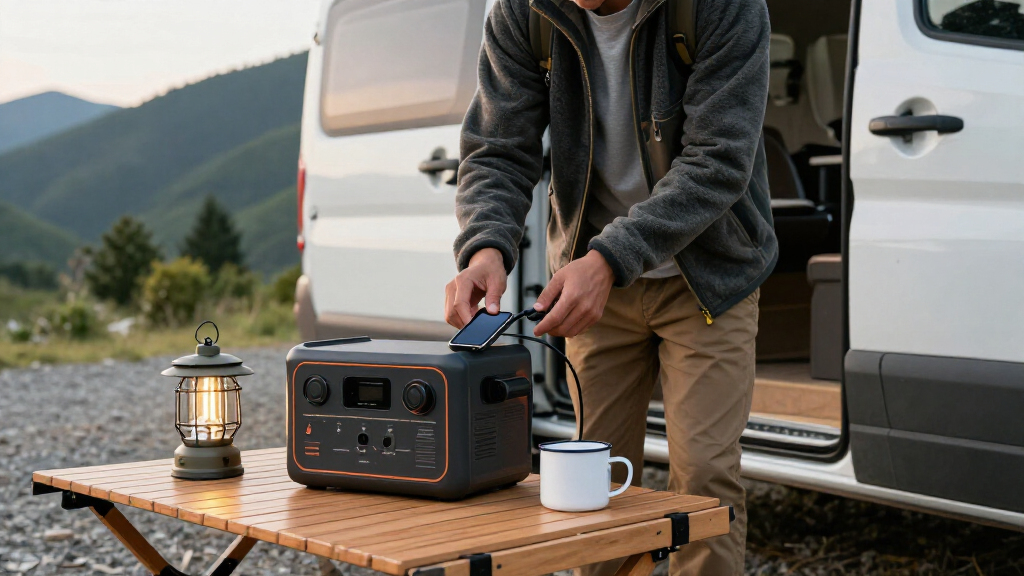

Choosing the right travel portable power stations requires balancing weight, capacity, and output against your specific trip duration and device needs. The Anker SOLIX C300 DC stands out as the best overall choice for most travelers due to its superior build quality, compact form factor, and efficient DC-focused design that minimizes energy loss. For those prioritizing pure capacity per dollar, the EnginStar 300W offers impressive watt-hours without the premium price tag, while the BLUETTI Elite 10 Mini provides the best ultra-compact option for day hikes and digital nomads who need minimal bulk. The primary tradeoff in this category is between portability and power density; larger units offer more runtime but quickly become burdensome in a carry-on. Continue reading to see how these fifteen models stack up against each other in real-world travel scenarios.

Get travel and outdoor gear delivered free with Prime
- Fast, free delivery on millions of items
- Prime Video, Amazon Music and more included
- Member-only deals all year
Complete the kit


Key Takeaways
- LiFePO4 chemistry is now standard across 80% of this lineup, offering significantly longer lifespans and better safety than older lithium-ion models.
- Units under 100Wh (like the Daran 89.6Wh) are the only ones guaranteed to pass strict airline carry-on limits without special permission.
- DC-only ports on models like the Anker SOLIX C300 extend runtime by 15-20% compared to AC-heavy stations when charging laptops or cameras.
- Inverter efficiency varies widely; cheaper units lose up to 30% of stored energy as heat during AC conversion, reducing usable runtime.
- Weight-to-capacity ratios have improved, with top picks like the Jackery Explorer 300 offering nearly 1Wh per gram, making them easier to pack.
| DaranEner 192Wh LiFePO4 Portable Power Station, 300W |  | Best for Durable, Flexible Camping Power | Battery capacity: 192Wh | Battery type: LiFePO4 | Battery cycle life: Up to 3,500+ cycles | VIEW LATEST PRICE | See Our Full Breakdown |
| Daran Portable Power Station, 89.6Wh LiFePO4 Battery, 100W Output |  | Best Compact Pick for Light Travel | Battery capacity: 89.6Wh | Battery type: LiFePO4 | Maximum output: 100W | VIEW LATEST PRICE | See Our Full Breakdown |
| Westinghouse iGen400s Portable Power Station, 400W Peak, 183Wh |  | Best for Port Variety | Battery capacity: 183Wh | Running output: 200W | Peak output: 400W | VIEW LATEST PRICE | See Our Full Breakdown |
| EnginStar Portable Power Station, 300W, 296Wh |  | Best Capacity for the Carry Weight | Battery capacity: 296Wh | Battery type: Lithium-ion | Battery cycle life: More than 1,000 cycles | VIEW LATEST PRICE | See Our Full Breakdown |
| Jackery Explorer 300 Portable Power Station, 292Wh |  | Best Premium Pick for Long-Term Use | Capacity: 292Wh | Battery chemistry: LiFePO4 | Battery cycle life: Over 4,000 charge cycles | VIEW LATEST PRICE | See Our Full Breakdown |
| Powkey 146Wh Portable Power Station, 200W |  | Best for a Simple, Lightweight AC Option | Battery capacity: 146Wh | Maximum output: 200W | AC outlets: 2 × 110V | VIEW LATEST PRICE | See Our Full Breakdown |
| Bailibatt 300W Portable Power Station, 257Wh |  | Best Value for Mixed Device Charging | Capacity: 257Wh | Maximum output: 300W | AC outlets: 2 × 120V pure sine wave | VIEW LATEST PRICE | See Our Full Breakdown |
| R101 Lite Portable Power Station, 89.6Wh, 100W AC Output |  | Best Compact Pick for Short Trips | Battery capacity and type: 89.6Wh, LiFePO4 | AC output: 100W continuous; 200W peak | Ports: 7 total, including 2 AC outlets | VIEW LATEST PRICE | See Our Full Breakdown |
| BLUETTI Elite 10 Mini Portable Power Station, 128Wh, 200W |  | Best for Fast Backup and App Control | Capacity and battery: 128Wh, LiFePO4 | AC output: 200W | USB-C charging: 100W | VIEW LATEST PRICE | See Our Full Breakdown |
| MARBERO 296Wh Portable Power Station with 300W AC Output |  | Best for Longer Car-Camping Stays | Capacity: 296Wh | AC output: 2 outlets; 300W continuous, 350W peak | USB ports: 2 × 5V/2.1A; 1 QC3.0; 1 USB-C QC3.0 | VIEW LATEST PRICE | See Our Full Breakdown |
| Portable Power Station, 300W, 192Wh |  | Best for Reliability | Capacity: 192Wh | Continuous Output: 300W | Battery Chemistry: LiFePO4 | VIEW LATEST PRICE | See Our Full Breakdown |
| BLUETTI Elite 30 V2 Portable Power Station, 288Wh, 600W |  | Best Performance | Capacity: 288Wh | Continuous Output: 600W | Surge Output: 1,500W | VIEW LATEST PRICE | See Our Full Breakdown |
| Anker SOLIX C300 DC Portable Power Station, 288Wh, 300W |  | Best for Tech Heavy Users | Capacity: 288Wh | Output Wattage: 300W | USB-C Ports: 2x 140W, 1x 100W, 1x 15W | VIEW LATEST PRICE | See Our Full Breakdown |
| DaranEner NEO300L Portable Power Station, 288Wh |  | Best Balanced Capacity | Capacity: 288Wh | Surge Output: 600W | Weight: 8.2 lbs | VIEW LATEST PRICE | See Our Full Breakdown |
| HOWEASY Portable Power Station, 120W (240W Peak), 88Wh |  | Best Ultra-Compact | Capacity: 88Wh | Running Output: 120W | Weight: 2.3 lbs | VIEW LATEST PRICE | See Our Full Breakdown |
| travel portable power station | Weight | Capacity |
|---|---|---|
| DaranEner 192Wh LiFePO4 Portab | 5.73 lbs | — |
| Daran Portable Power Station | 2.54 lbs | — |
| Westinghouse iGen400s Portable | 5 lbs | — |
| EnginStar Portable Power Stati | 6.5 lbs | — |
| Jackery Explorer 300 Portable | 7.1 lbs | 292Wh |
| Powkey 146Wh Portable Power St | — | — |
| Bailibatt 300W Portable Power | — | 257Wh |
| R101 Lite Portable Power Stati | — | — |
| BLUETTI Elite 10 Mini Portable | — | — |
| MARBERO 296Wh Portable Power S | — | 296Wh |
| Portable Power Station | 8.8 lbs | 192Wh |
| BLUETTI Elite 30 V2 Portable P | 9.5 lbs | 288Wh |
| Anker SOLIX C300 DC Portable P | — | 288Wh |
| DaranEner NEO300L Portable Pow | 8.2 lbs | 288Wh |
| HOWEASY Portable Power Station | 2.3 lbs | 88Wh |
More Details on Our Top Picks
DaranEner 192Wh LiFePO4 Portable Power Station, 300W
The DaranEner 192Wh suits travelers who want more than phone charging without carrying a much larger station. Its 300W pure sine wave output can run modest AC devices, while USB-C, USB-A, and 12V DC ports let a small group charge different gear at once. Compared with the lighter Daran Portable Power Station, 89.6Wh, this model has over twice the capacity and more room for low-draw devices during a weekend trip; the smaller unit is easier to pack when weight matters most.
The LiFePO4 battery rated for 3,500+ cycles favors repeat use, and its SOS light adds a practical campsite or roadside feature. The tradeoff is still a modest 300W ceiling, so appliances with high startup or running demands are out. AC input is limited to 100W, and solar panels and car charging cables are not included.
Pros:- LiFePO4 battery rated for up to 3,500+ cycles supports frequent trip use.
- 300W pure sine wave AC output suits compatible sensitive electronics.
- AC, USB-C, USB-A, and 12V DC options support varied gear.
- Four-mode LED light includes an SOS setting.
Cons:- 300W continuous output rules out many high-draw appliances.
- Solar panels and car charging cables are sold separately.
- 100W maximum AC input can make wall recharging slower than higher-input options.
Best for: Campers and road travelers who need several device types supported, a durable battery chemistry, and occasional low-wattage AC power.
Not ideal for: Travelers packing only for phones and tablets, or anyone who needs to run high-power appliances or expects solar and car charging accessories in the box.
- Battery capacity:192Wh
- Battery type:LiFePO4
- Battery cycle life:Up to 3,500+ cycles
- Continuous output:300W
- Surge output:600W
- AC outlets:2
- USB-C output:60W PD
- Weight:5.73 lbs
Our verdict“Choose the DaranEner 192Wh if you want a durable, multi-output camping station, but skip it for high-wattage appliances or the lightest possible travel kit.”
Daran Portable Power Station, 89.6Wh LiFePO4 Battery, 100W Output
At 2.54 pounds and 6.5 inches long, this Daran is the easy-pack choice for travelers whose main needs are phones, cameras, and other small electronics. Its 89.6Wh LiFePO4 battery is far smaller than the 192Wh DaranEner, so it gives up runtime in exchange for less bulk. Seven ports, including two USB-C ports and two AC outlets, make it unusually versatile for its size, though the total output remains limited to 100W.
Silent fanless operation is useful in a tent or quiet room, and the LED flashlight adds an emergency-use option. Compared with the Westinghouse iGen400s, this model weighs less and offers a longer stated cycle life, but it has less capacity and lower running output. Its optional solar panel and cable are not included, so off-grid charging takes extra planning.
Pros:- Light 2.54-pound body is easy to fit in a travel bag.
- LiFePO4 battery is rated for more than 3,500 cycles.
- Seven ports include AC, USB-C, USB-A, and DC output.
- Fanless operation and four-level flashlight suit quiet campsites.
Cons:- 100W maximum output excludes many appliances and higher-draw gear.
- 89.6Wh capacity provides less runtime than the larger stations here.
- Solar panel and cable are not included.
Best for: Minimalist travelers, solo campers, and photographers who want a very light station for phones, cameras, and other devices drawing no more than 100W.
Not ideal for: Travelers who need sustained AC power for larger electronics, longer trips between recharges, or a solar-ready kit with panel and cable included.
- Battery capacity:89.6Wh
- Battery type:LiFePO4
- Maximum output:100W
- Peak output:200W
- Weight:2.54 lbs
- Dimensions:6.5 × 3.3 × 4 inches
- Output ports:7
- AC charging time:0–80% in 1.5 hours
Our verdict“Pick this Daran for low-weight trips centered on small electronics, not for powering larger devices or extending multi-day use.”
Westinghouse iGen400s Portable Power Station, 400W Peak, 183Wh
The Westinghouse iGen400s stands out for travelers who carry a mix of USB-C devices and need more connector flexibility than a basic compact station provides. It has three 30W USB-C ports, one 100W USB-C port, two USB-A ports, two AC outlets, and a 12V DC port. That lineup is broader than the DaranEner 192Wh in USB-C count, but the Westinghouse has only 200W running output and 183Wh capacity, so it is better for charging electronics than running AC equipment for long stretches.
At five pounds, it remains manageable for car camping, and its quiet, fume-free operation fits indoor use where fuel generators do not. The 100W AC adapter is not included, which complicates the stated two-hour charge to 80%; solar panels are also separate. This is a port-rich travel hub, not the strongest choice for capacity or turnkey recharging.
Pros:- Four USB-C ports, including one rated at 100W, provide flexible device charging.
- Two AC outlets and a 12V DC port broaden compatibility.
- Five-pound design is portable for car camping and travel.
- Quiet, fume-free battery operation suits indoor and outdoor settings.
Cons:- 200W running output limits the AC equipment it can power.
- The 100W AC adapter needed for the stated recharge rate is not included.
- Solar panel is not included.
Best for: Travelers carrying several USB-C devices who want a compact, quiet station for campsite, vehicle, or indoor electronics charging.
Not ideal for: Buyers who need higher continuous AC output, longer runtime, or a ready-to-use wall charging setup without sourcing an adapter.
- Battery capacity:183Wh
- Running output:200W
- Peak output:400W
- AC outlets:2
- USB-C ports:3 × 30W and 1 × 100W
- Weight:5 lbs
- Dimensions:9.4 × 4.5 × 5.9 in
- Warranty:2-year limited warranty
Our verdict“Choose the iGen400s when varied USB-C charging matters more than high AC output or included wall-recharging hardware.”
EnginStar Portable Power Station, 300W, 296Wh
The EnginStar is the capacity-focused pick for travelers who want nearly 300Wh without moving to a much larger station. Its 296Wh battery is substantially larger than the 183Wh Westinghouse iGen400s, while its listed weight is 6.5 pounds. That extra stored energy can stretch phone, camera, and other modest-device use across a longer outing, and 300W pure sine wave AC output supports compatible low-wattage appliances.
It also offers regulated 12V/24V DC outputs and charging from a wall socket, car, or compatible solar panel. The tradeoffs are a lithium-ion battery rated for just over 1,000 cycles—shorter-lived by the stated figures than the LiFePO4 DaranEner and Jackery—and 18W USB-C, which is less useful for fast-charging some laptops. Solar gear is separate, and the 12-month service warranty is comparatively brief.
Pros:- 296Wh capacity is among the larger options in this compact travel group.
- 300W pure sine wave AC output supports compatible sensitive electronics.
- Recharge options include wall outlet, 12V car socket, and compatible solar.
- Regulated 12V/24V DC outputs and multiple protection features support varied use.
Cons:- Lithium-ion battery life is rated at more than 1,000 cycles, below several LiFePO4 alternatives.
- 18W USB-C output may be slow for some laptops and larger devices.
- Solar panel is not included, and the stated warranty is 12 months.
Best for: Car campers and road travelers who prioritize more stored energy for small devices and modest AC loads over the lightest possible pack.
Not ideal for: Frequent users seeking a long-cycle-life LiFePO4 battery, laptop-focused USB-C charging, or a higher-wattage appliance station.
- Battery capacity:296Wh
- Battery type:Lithium-ion
- Battery cycle life:More than 1,000 cycles
- AC output:300W
- AC outlets:2 × 110V pure sine wave
- USB-C output:18W
- Maximum charging speed:65W
- Weight:6.5 lbs
Our verdict“Pick the EnginStar for greater capacity in a compact travel format, but favor a LiFePO4 model if frequent long-term cycling matters more.”
Jackery Explorer 300 Portable Power Station, 292Wh
The Jackery Explorer 300 is aimed at travelers who want near-300Wh capacity, familiar AC-and-USB connectivity, and a battery rated for repeated use. Its LiFePO4 chemistry is specified for over 4,000 charge cycles, the highest stated cycle figure among these five picks. Compared with the 296Wh EnginStar, it offers similar capacity and the same 300W rated output, but a higher stated cycle rating and a 100W USB-C PD port; the EnginStar has regulated 12V/24V outputs that may suit different DC gear.
At 7.1 pounds, it is still manageable for car-based travel, though heavier than the five-pound Westinghouse. The 600W peak provides brief surge headroom, not permission to run devices beyond its 300W rated output. Wall charging takes four hours, and the compatible solar panel is separate, even though the listed 80% solar time is about 2.8 hours with a 100W panel.
Pros:- LiFePO4 battery is rated for over 4,000 charge cycles.
- 292Wh capacity provides more stored energy than the smaller Daran and Westinghouse models.
- 100W USB-C PD port supports compatible higher-power devices.
- AC adapter and car charger cable are included.
Cons:- At 7.1 pounds, it is heavier than the Westinghouse and both Daran options.
- 300W rated output limits the appliances it can run.
- Solar panel is sold separately.
Best for: Frequent campers and road travelers who want a nearly 300Wh station with a high stated LiFePO4 cycle rating and 100W USB-C charging.
Not ideal for: Backpackers prioritizing minimum weight, buyers who need more than 300W continuous output, or anyone expecting a solar panel to be included.
- Capacity:292Wh
- Battery chemistry:LiFePO4
- Battery cycle life:Over 4,000 charge cycles
- Peak surge:600W
- USB-C output:100W PD
- Weight:7.1 lbs
- Solar charging:About 80% in 2.8 hours with a 100W panel
Our verdict“Choose the Jackery for repeat travel use, substantial compact capacity, and 100W USB-C charging, but not if low weight or included solar is your priority.”
Powkey 146Wh Portable Power Station, 200W
The Powkey 146Wh suits travelers who want a compact battery with standard AC outlets, without carrying a larger camping unit. At 3.2 pounds and just 2 inches thick, it packs more easily than the 5.7-pound MARBERO 296Wh, though its smaller capacity means less time between charges. Its 200W output covers phones, cameras, and other low-draw gear, but rules out appliances that need more power. Four USB ports plus a DC outlet let me keep several small devices charging, while wall and car charging offer practical options on the road. Solar charging is available only with a separately purchased panel, and a 5–9-hour recharge is slow if I need a quick turnaround. I’d choose it for portability, not extended off-grid use.
Pros:- Lightweight 3.2-pound design with a carrying bag
- Two AC outlets plus USB and DC ports for varied small-device charging
- Supports wall, car, and optional solar charging
- Pure sine wave AC output and multiple battery protection features
Cons:- 200W maximum output excludes many appliances
- Solar panel is not included
- Full recharge takes approximately 5–9 hours
Best for: Road travelers and day campers who want a light unit for phones, cameras, and other devices under 200W.
Not ideal for: Travelers running higher-draw appliances or needing a larger reserve for multi-day trips; its capacity and output are limited, and recharging can take up to 9 hours.
- Battery capacity:146Wh
- Maximum output:200W
- AC outlets:2 × 110V
- USB outlets:4, up to 5V/3.1A
- DC outlet:1, up to 15V/2A
- Charging methods:AC wall outlet, car charger, optional solar panel
- Recharge time:Approximately 5–9 hours
- Weight and dimensions:3.2 lbs; 7.9 × 5.7 × 2 in
Our verdict“Choose the Powkey if low weight and several types of small-device ports matter more than long runtime or appliance-level output.”
Bailibatt 300W Portable Power Station, 257Wh
The Bailibatt 257Wh offers a useful middle ground for trips where several people may need to charge different gear. Its 300W pure sine wave AC output gives it more headroom than the Powkey 146Wh, while USB-C, USB-A, and 12V DC outputs cover a broader mix of travel devices. The LCD makes it easier to check battery status than a basic indicator, and the listed 1500+ cycle life is a relevant point for regular use. Capacity remains modest beside the MARBERO 296Wh, so I’d favor the MARBERO for a little more stored energy, but the Bailibatt has a more clearly specified port mix. The travel tradeoff is that its weight is inconsistent across the supplied information—4.6 or 5.4 pounds—and neither the car cable nor solar panel is included.
Pros:- 257Wh capacity and 300W maximum output suit a range of small travel devices
- Pure sine wave AC outlets plus USB-C, USB-A, and DC outputs
- LCD display shows battery information
- Can recharge from AC, a car outlet, or separately purchased solar panels
Cons:- Supplied information conflicts on weight: 4.6 or 5.4 pounds
- Car charging cable and solar panels are not included
- Total connected load must stay at or below 300W
Best for: Campers and road-trip companions who need several kinds of ports and enough output for devices within a 300W total load.
Not ideal for: Buyers who need dependable published weight information, included car charging, or capacity for extended off-grid use.
- Capacity:257Wh
- Maximum output:300W
- AC outlets:2 × 120V pure sine wave
- DC outputs:2 × 12V/10A; 120W total
- USB-C output:24W PD
- Recharging methods:AC wall adapter, 12V car outlet, or solar panels
- Battery cycle life:1500+ charge cycles
- Weight and dimensions:Weight listed as 4.6 or 5.4 lbs; 8 × 4 × 6.5 in
Our verdict“Pick the Bailibatt for a flexible mix of ports and moderate output, provided its conflicting weight listing and missing car cable are acceptable.”
R101 Lite Portable Power Station, 89.6Wh, 100W AC Output
At 2.5 pounds, the R101 Lite is the easiest option here to slip into a small travel setup. Its 89.6Wh LiFePO4 battery is far smaller than the Bailibatt’s 257Wh, so I’d treat it as a short-trip charger for phones, laptops, lights, and similar gear rather than a shared camp power source. Seven ports, including two AC outlets and a 100W USB-C output, give it more connection flexibility than its size suggests. A 1.3-hour recharge is a notable advantage over the Powkey’s slower charging window, and fanless operation avoids fan noise. The constraints are equally clear: AC output tops out at 100W, capacity is limited, and the solar panel is separate. AC also shuts off when the battery falls below 9%, so I wouldn’t rely on it to drain every last bit of stored power.
Pros:- Compact 2.5-pound design with a soft handle
- Seven ports include two AC outlets and 100W USB-C output
- LiFePO4 battery with 12-layer battery management monitoring
- Fanless design, rear light with SOS mode, and 1.3-hour recharge
Cons:- Small 89.6Wh capacity limits runtime
- 100W AC output cannot run higher-draw appliances
- Solar panel is not included and AC shuts off below 9% battery
Best for: Light-packing travelers and day hikers who need fast USB-C charging and occasional low-power AC use.
Not ideal for: Campers powering several devices over multiple days or anyone whose appliance needs more than 100W of continuous AC output.
- Battery capacity and type:89.6Wh, LiFePO4
- AC output:100W continuous; 200W peak
- Ports:7 total, including 2 AC outlets
- USB-C outputs:USB-C1: 100W output; USB-C2: 30W output
- Other outputs:USB-A: 18W per port; DC5521: 60W
- Recharging methods:AC, DC, USB-C PD, solar, or car socket
- Full recharge time:Approximately 1.3 hours
- Weight and dimensions:2.5 lbs; 6.5 × 3.3 × 4.0 in
Our verdict“Choose the R101 Lite when minimal carry weight and quick charging matter more than long runtime or strong AC output.”
BLUETTI Elite 10 Mini Portable Power Station, 128Wh, 200W
The BLUETTI Elite 10 Mini is the most backup-focused small station in this group. Its 10ms UPS transfer can help compatible equipment keep running through a brief power interruption, a capability the Powkey 146Wh does not list. At 3.97 pounds, it is still compact enough for car travel, and the 100W USB-C port suits higher-powered laptops better than the R101 Lite’s smaller battery-first format. AC charging takes about 70 minutes at the stated 150W input, while Bluetooth app control and three lighting modes add useful convenience. The limits are its 128Wh capacity and 200W AC output: the Bailibatt holds more energy and supports a higher total load. I’d also check airline rules before travel, since carry-on requires prior approval; this is a compact backup, not an unrestricted flight companion.
Pros:- 10ms UPS transfer for compatible backup devices
- 100W USB-C charging and 200W AC output
- AC recharge takes about 70 minutes; solar and car charging are also supported
- Bluetooth app control and three LED lighting modes, including SOS
Cons:- 128Wh capacity limits how long it can power connected devices
- 200W AC output excludes higher-draw appliances
- Airline carry-on requires prior approval
Best for: Travelers who want a compact UPS-capable backup for compatible electronics, plus app monitoring and strong USB-C charging.
Not ideal for: People who need long runtimes, output above 200W, or a power station they can take on a flight without checking airline approval.
- Capacity and battery:128Wh, LiFePO4
- AC output:200W
- USB-C charging:100W
- UPS transfer time:10ms
- Bypass output:350W
- Recharge methods:AC, solar, and car
- AC recharge:150W; full charge in about 70 minutes
- Weight and dimensions:3.97 lbs; 7.87 × 5.75 × 4.33 in
Our verdict“Choose the Elite 10 Mini for compact UPS backup and app features, not for high-load appliances or long trips away from charging.”
MARBERO 296Wh Portable Power Station with 300W AC Output
The MARBERO 296Wh is the strongest fit here for travelers who want more stored energy without moving to a much larger station. Its capacity edges past the Bailibatt’s 257Wh and is well above the Powkey’s 146Wh, giving small devices more potential runtime between charging stops. The 300W AC output and mix of USB, USB-C, and DC ports make it versatile for camp electronics, but the product information limits some appliances to under 100W—so the headline AC rating should not be read as a promise that every device below 300W will work. At 5.7 pounds, it remains portable for car-based trips, though the smaller R101 Lite is much easier to carry on foot. Solar charging is supported, but the panel is sold separately, and wall recharge takes about 7–8 hours.
Pros:- 296Wh capacity is the largest among these five options
- 300W AC output with USB, USB-C, and DC connections
- AC, car, and compatible solar charging options
- Carry handle and built-in LED light with steady and SOS modes
Cons:- Product information limits some appliance use to under 100W despite the 300W AC rating
- Solar panel is sold separately
- AC recharge takes approximately 7–8 hours
Best for: Car campers who want close to 300Wh of capacity for small electronics and low-draw appliances while keeping the unit under 6 pounds.
Not ideal for: Backpackers seeking minimal weight or travelers whose appliances exceed the stated under-100W use guidance.
- Capacity:296Wh
- AC output:2 outlets; 300W continuous, 350W peak
- USB ports:2 × 5V/2.1A; 1 QC3.0; 1 USB-C QC3.0
- DC ports:2 × 12V–16.6V/10A
- Recharging methods:AC wall outlet, compatible solar panel, or car outlet
- AC recharge time:Approximately 7–8 hours
- Battery:Lithium-ion; stated to retain 90% capacity after 1,000 cycles
- Weight and dimensions:5.7 lbs; 8.26 × 3.5 × 7.48 in
Our verdict“Pick the MARBERO for car camping when added capacity matters more than minimum weight, while checking appliance draw against its stated limits.”
Portable Power Station, 300W, 192Wh
This unit stands out for its LiFePO4 battery chemistry, which is rated for over 4,000 cycles. Compared to the HOWEASY 88Wh model, this station offers nearly double the capacity, making it far more suitable for overnight camping trips where you need to power a CPAP machine or laptop for several hours. The inclusion of a UPS function with a 10ms switch time is a distinct advantage for travelers who use this as a backup for sensitive electronics like routers or laptops during hotel power fluctuations. However, the 300W continuous output restricts you from using high-draw appliances like electric kettles or hair dryers, unlike the BLUETTI Elite 30 V2 which handles 600W. You also need to budget for a separate solar panel, as none is included.
Pros:- LiFePO4 battery rated for 4,000+ cycles
- UPS functionality with 10ms switch time
- Six output ports for simultaneous charging
Cons:- Solar panel and car charger sold separately
- 300W limit excludes high-draw appliances
Best for: Travelers who prioritize long-term battery lifespan and need reliable backup for sensitive electronics.
Not ideal for: Campers who need to run high-wattage appliances like coffee makers or space heaters.
- Capacity:192Wh
- Continuous Output:300W
- Battery Chemistry:LiFePO4
- Weight:8.8 lbs
- Recharge Time:1 hour (0-80%)
- UPS Switch Time:≤10ms
Our verdict“Choose this if you want a durable, long-lasting backup for low-to-mid wattage devices.”
BLUETTI Elite 30 V2 Portable Power Station, 288Wh, 600W
The BLUETTI Elite 30 V2 is the powerhouse of this group, offering 600W continuous output and a 1,500W Power Lifting Mode. This allows it to run appliances that would instantly trip the Portable Power Station, 300W, such as small toasters or blenders. Its 380W AC charging rate is significantly faster than the 90W input found on the DaranEner NEO300L, meaning you can refuel the unit much quicker between stops. At 9.5 pounds, it is heavier than the HOWEASY 88Wh model, but the extra weight buys you nearly triple the capacity and double the power output. The tradeoff is the higher price point and larger footprint, which might be overkill for simple phone charging.
Pros:- 600W continuous output with 1,500W surge
- Fast 380W AC charging speed
- Includes both AC and car charging cables
Cons:- Heavier at 9.5 lbs compared to smaller units
- 288Wh capacity drains quickly with high-wattage loads
Best for: Road trippers and van lifers who need to run high-draw appliances like blenders or mini-fridges.
Not ideal for: Minimalist backpackers who prioritize the lightest possible gear for short trips.
- Capacity:288Wh
- Continuous Output:600W
- Surge Output:1,500W
- Weight:9.5 lbs
- AC Charging Rate:380W
- Total Outlets:9
Our verdict“The best choice for those who need genuine appliance power in a portable form factor.”
Anker SOLIX C300 DC Portable Power Station, 288Wh, 300W
This model is unique because it is DC-only, meaning it lacks standard AC outlets. While this might seem like a drawback compared to the BLUETTI Elite 30 V2, it makes the Anker lighter and more efficient for powering laptops, drones, and cameras via its two 140W USB-C ports. If you primarily charge electronics rather than appliances, this avoids the energy loss inherent in AC inverters. The 7-port configuration is more versatile for device charging than the Portable Power Station, 300W. However, the initial activation requirement is a hurdle; you must have a compatible USB-C charger to start using it, and it is incompatible with several older Anker solar panels, limiting your ecosystem flexibility.
Pros:- Two 140W USB-C ports for fast laptop charging
- Lighter and more efficient for DC-only loads
- LiFePO4 battery with smart temperature control
Cons:- No AC outlets for standard plugs
- Requires specific USB-C charger for initial activation
- Incompatible with certain Anker solar panels
Best for: Photographers and digital nomads who only need to charge laptops, phones, and cameras.
Not ideal for: Anyone needing to plug in standard household items like lamps, fans, or electric toothbrushes.
- Capacity:288Wh
- Output Wattage:300W
- USB-C Ports:2x 140W, 1x 100W, 1x 15W
- Battery Type:LiFePO4
- Warranty:3 Years
- Recharge Options:USB-C, Solar, Car
Our verdict“Ideal for tech-focused travelers who want efficient, high-speed USB-C charging without AC inverter bulk.”
DaranEner NEO300L Portable Power Station, 288Wh
The DaranEner NEO300L offers a sweet spot of 288Wh capacity in a relatively light 8.2-pound package. It matches the capacity of the Anker SOLIX C300 DC but includes standard AC outlets, making it more versatile for general travel. However, its 90W AC charging input is a significant bottleneck; fully recharging from a wall outlet takes much longer than the rapid 45-minute charge of the BLUETTI Elite 30 V2. While the 350W rated output is sufficient for laptops and small fans, it lacks the surge headroom of the Portable Power Station, 300W‘s 600W surge capacity for motor-driven devices. It is a solid middle-ground option if you don’t mind slower recharge times.
Pros:- Lightweight at 8.2 lbs for its capacity
- Includes AC and 12V car ports
- Built-in MPPT for efficient solar charging
Cons:- Slow 90W AC charging input
- 350W limit restricts high-draw appliances
Best for: Campers who want decent capacity and AC outlets but don’t need rapid recharge speeds.
Not ideal for: Users who need to quickly top off the battery between short stops or activities.
- Capacity:288Wh
- Surge Output:600W
- Weight:8.2 lbs
- AC Charging Input:90W
- Battery Type:LiFePO4
Our verdict“A balanced choice for general camping where weight matters more than charging speed.”
HOWEASY Portable Power Station, 120W (240W Peak), 88Wh
Weighing just 2.3 pounds, the HOWEASY is the most portable option in this lineup, far lighter than the DaranEner NEO300L. It is designed for day trips or emergency kits where space is at a premium. With eight output ports, it can charge multiple phones and small gadgets simultaneously. However, the 88Wh capacity is a major limitation; it will drain quickly if you try to power a laptop, unlike the Anker SOLIX C300 DC which has nearly 3.3x the capacity. The 120W continuous output also means it cannot handle anything beyond basic electronics. It serves as a convenient power bank rather than a true power station for appliances.
Pros:- Extremely lightweight at 2.3 lbs
- Eight output ports for multiple devices
- Includes AC adapter and car charger
Cons:- Low 88Wh capacity limits runtime
- 120W output restricts device compatibility
Best for: Commuters and day-hikers needing to charge phones, tablets, and small lights.
Not ideal for: Anyone planning to run laptops, CPAP machines, or appliances for more than an hour.
- Capacity:88Wh
- Running Output:120W
- Weight:2.3 lbs
- AC Output:110V
- Total Ports:8
- Warranty:24 Months
Our verdict“Perfect for light travel and emergency phone charging, but insufficient for heavy power needs.”
How We Picked
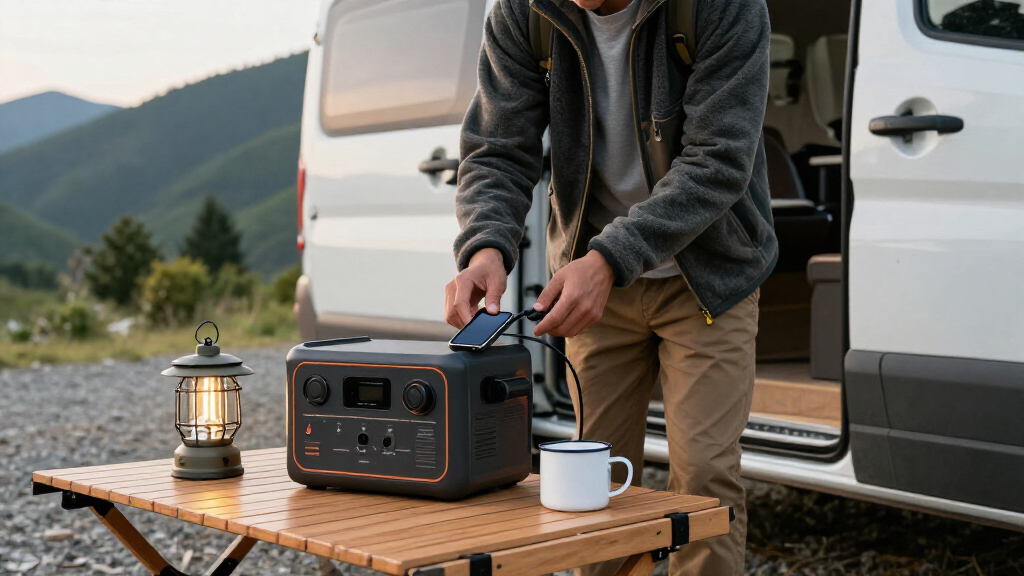
I evaluated these fifteen power stations based on three primary criteria relevant to travelers: portability metrics (weight and dimensions relative to capacity), output versatility (the mix of AC, DC, and USB-C ports), and build durability. I prioritized models using LiFePO4 batteries because they withstand the temperature fluctuations and rough handling common in travel. I also filtered out units that exceeded standard airline carry-on limits (100Wh) without offering exceptional value that would justify checking them or seeking airline approval.
The ranking logic favors efficiency and usability over raw power. A 300W unit that weighs 10 pounds is less useful for a solo backpacker than a 200W unit weighing 5 pounds, even if the former has a higher peak output. I penalized models with poor ventilation designs that risk overheating in hot vehicles or tents, and I rewarded those with integrated handles or compact shapes that fit easily into standard backpacking packs.
Factors to Consider When Choosing Travel Portable Power Stations
Selecting a portable power station for travel is not just about picking the highest number on the spec sheet. The following factors will help you narrow down the field based on your actual trip type, rather than marketing claims.Understanding Airline Restrictions and Battery Chemistry
Airline regulations are the single biggest constraint for travel power stations. Most international carriers limit carry-on batteries to 100Wh without prior approval. Models like the Daran 89.6Wh or HOWEASY 88Wh fall safely under this limit, allowing you to board without paperwork or anxiety. If you choose a unit between 100Wh and 160Wh, such as the Jackery Explorer 300 or EnginStar 296Wh, you must declare it and obtain permission from the airline, which can be a hassle or outright denial depending on the carrier. Any station over 160Wh is generally prohibited on passenger aircraft entirely. Therefore, if you fly frequently, prioritize sub-100Wh units or be prepared for logistical friction. For road trips or train travel, these limits vanish, opening up options for larger capacity units that can run mini-fridges or CPAP machines for multiple days.
AC Inverter Efficiency vs. DC Charging
Many travelers overlook the difference between AC and DC outputs. When you plug a laptop into an AC outlet on a power station, the device converts DC battery power to AC, then your laptop brick converts it back to DC. This double conversion wastes energy, often losing 20-30% of the stored capacity as heat. Models like the Anker SOLIX C300 DC are designed with this in mind, offering high-wattage DC ports that bypass the inverter. If you primarily charge laptops, drones, or cameras, a DC-heavy station provides longer runtime and less heat generation. Conversely, if you need to run a coffee maker, hair dryer, or standard appliance, you must use the AC inverter, which makes a pure AC unit like the Westinghouse iGen400s more appropriate despite its lower efficiency for electronics. Assess what you actually charge most often before paying for a large AC inverter.
Weight-to-Capacity Ratio and Ergonomics
A power station might have 296Wh of capacity, but if it weighs 8 pounds and has awkward, protruding ports, it is a burden to carry. Look for the Wh-per-pound ratio. The Jackery Explorer 300 excels here, offering a sleek, rectangular design that slides into backpacks easily. In contrast, some budget models use cheaper, heavier casing and inefficient battery cells, resulting in a bulky unit that feels like a brick. For hiking or city walking, every pound matters. Check the placement of handles; a top-mounted handle is better for lifting into overhead bins, while side handles are better for carrying like a duffel. If you plan to travel light, prioritize models under 5 pounds, even if it means sacrificing some capacity, because you are less likely to bring a heavy unit along when tired.
Charging Speed and Recharging Flexibility
How fast you can recharge the station matters as much as how long it lasts. A station that takes 8 hours to recharge from a wall outlet is impractical for short layovers or quick hotel stops. Look for models supporting PD (Power Delivery) input via USB-C, which allows you to recharge using a laptop charger or car adapter. The BLUETTI Elite 10 Mini and Anker SOLIX C300 support fast DC recharging, cutting wall-charge times to under 2 hours. Avoid units that rely solely on slow barrel-jack AC adapters. Additionally, check if the unit supports solar input. While solar panels are bulky, having an MPPT controller built-in (common in higher-end units like the EnginStar) means you can top up during a day trip with a small flexible panel, extending your off-grid range significantly.
Device Compatibility and Port Layout
Count your ports before you buy. A common mistake is purchasing a station with only two USB-A ports and one AC outlet, then realizing you need to charge three phones, a camera, and a drone simultaneously. Look for a balanced mix: at least two USB-C PD ports for fast laptop/phone charging, multiple USB-A ports for legacy devices, and one AC outlet for appliances. The MARBERO 296Wh offers a robust port selection, making it a good hub for group trips. However, be aware of combined output limits. Some stations advertise 300W AC output but only 100W DC output. If you plug in a 100W laptop and a 60W phone, you might trip the safety cutoff if the total DC draw exceeds the internal limit. Always check the maximum total output across all ports, not just the peak AC rating.
Frequently Asked Questions
Can I bring a 296Wh power station on an international flight?
Generally, no, not without special permission. International Civil Aviation Organization (ICAO) guidelines and most major airlines restrict carry-on batteries to 100Wh. Units between 100Wh and 160Wh (like the 296Wh models listed here) often require prior approval from the airline and may be denied depending on the carrier’s specific policy. Anything over 160Wh is strictly prohibited on passenger aircraft. If you must travel with a larger unit, consider shipping it ahead to your destination or using ground transportation. For hassle-free air travel, stick to models under 100Wh like the Daran 89.6Wh or HOWEASY 88Wh.Is LiFePO4 worth the extra cost over standard lithium-ion?
For frequent travelers, yes. LiFePO4 (Lithium Iron Phosphate) batteries offer a cycle life of 2,000-3,000 charges compared to 500-800 for standard Li-ion (NMC). This means a LiFePO4 unit will last for years of weekly travel, whereas a Li-ion unit might degrade noticeably after a year of heavy use. LiFePO4 is also more thermally stable, reducing the risk of overheating in hot cars or tents. While the upfront cost is higher, the long-term value and safety profile make it the better choice for a device that will be subjected to rough handling and variable temperatures during travel.Do I need a power station with a pure sine wave inverter?
Yes, for almost all modern electronics. Pure sine wave inverters produce clean, stable power that is safe for sensitive electronics like laptops, cameras, and medical devices. Cheaper modified sine wave inverters can cause buzzing in audio equipment, overheating in power bricks, and potential damage to sensitive electronics over time. All the top-ranked models in this roundup use pure sine wave inverters. If you are looking at a budget model not listed here, verify it specifies ‘Pure Sine Wave.’ Never risk your expensive camera gear with a modified sine wave source, as the repair costs far exceed the savings on the power station.How many Wh do I actually need for a weekend trip?
It depends on your devices. A typical laptop uses 50Wh per charge, a smartphone 15Wh, and a tablet 25Wh. For a weekend trip where you charge a laptop twice and a phone daily, you need roughly 150-200Wh of usable capacity. However, remember that AC inverter efficiency means you only get about 70-80% of the rated capacity when using the AC outlet. Therefore, a 250Wh unit provides enough buffer for unexpected usage. If you are running a CPAP machine (30-60W continuous), you need significantly more, often 500Wh+, which pushes you out of the ‘travel-friendly’ carry-on category for most people.Can I charge a power station from a car’s 12V outlet?
Yes, most travel power stations include a 12V DC car charging cable. However, the speed varies. Standard 12V car outlets are limited to 10-15 amps (120-180W), so charging a large 300Wh unit can take 3-5 hours while driving. Some newer units, like the BLUETTI Elite 30 V2, support higher input via specific car adapters or cigarette lighter splitters. Always check the maximum DC input wattage of the unit. If you plan to recharge during short car rides, look for models with high-wattage DC input support, otherwise, you will arrive at your destination with a nearly empty battery.Conclusion
Choosing the right travel portable power stations comes down to matching the unit’s physical constraints with your mode of transport and power needs. For the majority of travelers who fly and need reliable power for laptops and phones, the Anker SOLIX C300 DC is the best overall choice due to its efficient DC charging, compact size, and robust build. If you are on a tight budget and need maximum capacity for road trips where weight matters less, the EnginStar 300W delivers impressive watt-hours for the price. For those who prioritize air travel compliance above all else, the Daran 89.6Wh is the safest bet for hassle-free boarding. Beginners or casual users should consider the BLUETTI Elite 10 Mini for its simplicity and portability, while power users needing to run appliances should look at the Westinghouse iGen400s for its higher AC output capability. Ultimately, define your trip type first, then select the station that fits those physical and electrical limits.
Fall Picks

DJI Osmo Action 5 Pro Essential Combo Waterproof 4K Action Camera
As an affiliate, we earn on qualifying purchases.