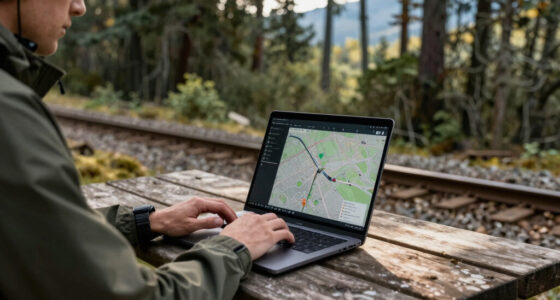
📊 Full opportunity report: Audio Stories That Follow The Paths You Take on IdeaNavigator AI — validation score, market gap, and execution plan.

Get travel and outdoor gear delivered free with Prime
- Fast, free delivery on millions of items
- Prime Video, Amazon Music and more included
- Member-only deals all year
TL;DR
IdeaNavigator AI has outlined a product concept for an app that generates audio narration based on a walker’s live route, drawing on open information about local places. The proposal recommends a limited test in two cities, measuring whether users return by week four and auditing the accuracy of the narration; no launch or test results are reported.
IdeaNavigator AI has proposed a test of a location-reactive audio walking app that would generate narration about a user’s route, including local history, buildings and other details. The concept is an early product proposal, not a reported launch: it recommends piloting the app in two cities and measuring repeat use and narration accuracy before deciding whether the idea merits further development.
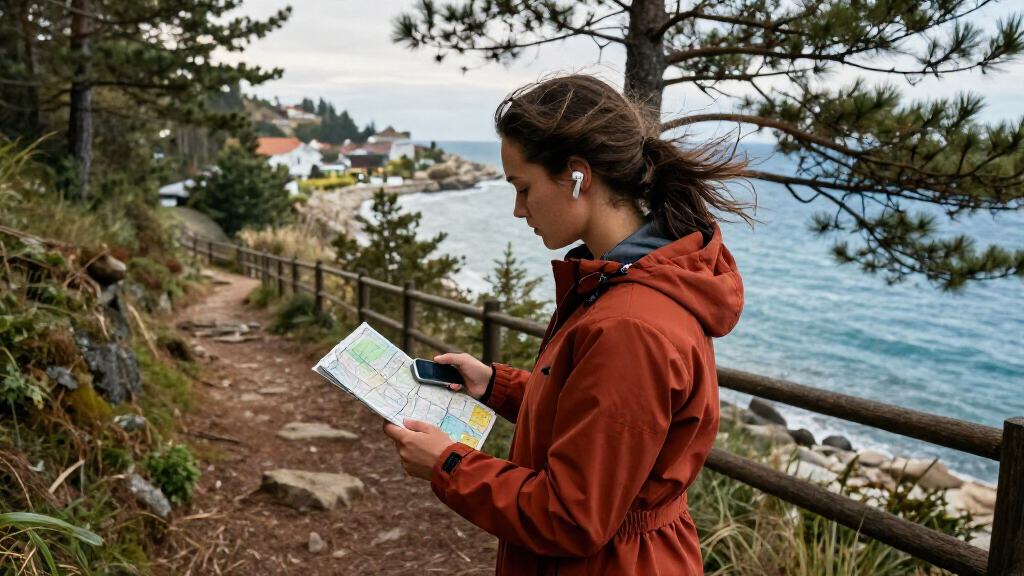
The proposed app would start narrating after a user begins a walk, using the route and nearby locations to select material. Its narration could respond as the walker reaches corners and landmarks, rather than playing a fixed recording that ignores where the user is. Suggested content modes include history, architecture and nature, along with the option to save favorite routes.
The concept identifies its intended user as someone who wants their neighborhood or travel walks narrated. It argues that existing audio formats can leave a gap: general podcasts are not typically tied to a person’s location, while many guided-tour apps focus on established landmark districts. The proposal’s premise is that streets outside those districts may also offer stories, though it supplies no research quantifying demand or documenting how current products serve those routes.
For a first test, IdeaNavigator AI recommends launching in two cities and tracking walks per week and retention at week four. It also calls for an audit of narration accuracy on a sample of routes. Those are suggested validation measures, not results: the proposal does not identify pilot cities, provide user figures, or report that any app has been built or tested.
AUDIO · PLACE · PRODUCT CONCEPT
Audio Stories That Follow The Paths You Take
A proposed walking app would turn live routes into location-aware narration, drawing on open information about nearby history, architecture and nature. The idea is still a concept: no launch or pilot results are reported.
No launch reported
Narration follows a walk
Recommended, not confirmed
No user or accuracy results
A walk becomes the playlist
The proposed app would use a walker’s live route and nearby places to select material. Unlike a fixed recording, it could respond as someone reaches a corner or landmark.
Stories in context
Narration would be selected around the places a walker passes, including streets beyond established landmark districts.
History to nature
Suggested modes include local history, architecture and nature, with favorite routes available to save.
Curious walkers
The initial audience is people who want their neighborhood or travel walks narrated—not a broad audience proven by research.
What the first pilot could examine
The recommendation is to test whether the experience earns repeat use and whether its generated descriptions can meet an acceptable accuracy standard.
Start walking
The concept begins narration once a user starts a route.
Match nearby places
Route and location inform which open-source details are considered.
Review the output
Auditors check narration on a sample of routes for accuracy.
Measure return use
Track walks per week and active users at week four.
Promise meets practical unknowns
A live, generated guide could reach ordinary streets where fixed tours may not go. Its usefulness and business case remain untested.
From landmark circuits to live routes
Traditional tours are often produced for specific destinations and routes. This concept proposes on-demand narration for neighborhoods and travel paths. It argues that open place information and language models may change production economics, but offers no demo, cost comparison or accuracy evaluation to support that claim.
| Measure | Why it matters | Proposal status |
|---|---|---|
| Walks per week | Signals repeat activity | Suggested; no data |
| Week-four retention | Tests whether use continues | Suggested; no target |
| Sampled route audit | Checks names, dates and descriptions | Suggested; no method |
| Willingness to pay | Tests subscription or licensing | Unspecified |
Trust, safety and operations
Incorrect local facts could weaken confidence. The proposal does not specify how sources would be checked, how conflicting accounts would be handled, or how errors would be corrected. It also leaves location privacy, offline use and distraction near roads or crossings unanswered.
Two possible revenue paths
A consumer subscription and a tourism-board licensing tier are suggested. No prices, customer commitments, cost estimates or evidence of willingness to pay are provided. A pilot alone would not establish that either model is viable.
A test is proposed; details are pending
No app launch or trial is confirmed. The concept names neither cities nor a schedule, team, participant count, benchmark or rule for expanding, revising or ending a pilot.
Has the app launched?
No launch or release date is reported. It remains a product concept.
Where would it be tested?
Two cities are recommended, but no locations or timing are specified.
How would facts be checked?
A sample route audit is suggested; its method and quality threshold are not described.
What would count as success?
Weekly walks, week-four retention and accuracy are proposed measures. No targets or outcomes are available.
Testing Repeat Use and Accuracy
The proposal’s value lies in framing the idea as a narrow product test, rather than assuming that on-demand narration will attract a broad audience. Whether people use it repeatedly is a basic commercial question: a walk that prompts a first download may still fail to become a weekly habit. Measuring activity at week four would give a pilot one defined point at which to examine retention, although the proposal sets no target that would count as success.
Accuracy presents a separate practical concern. A system that generates route-specific stories needs to get names, dates and descriptions right, and to distinguish reliable records from uncertain or missing information. The recommended route audit acknowledges that issue, but no method, quality threshold or process for correcting errors is specified. For users, a mistake about a local place could undermine confidence in the rest of the narration.
The business case is also untested. The proposal suggests a consumer subscription and a licensing tier for tourism boards, but it gives no prices, customer commitments or evidence of willingness to pay. A two-city pilot could help establish whether walkers return and whether the product can produce dependable content; it would not, on its own, demonstrate that either revenue model is viable.
Products Worth Considering

Sony WH-1000XM6 Wireless Noise-Canceling Over-Ear Headphones, Blue, Bundle

Bose QuietComfort Wireless Bluetooth Headphones with Active Noise Cancellation, Mic, USB‑C Charging, Deep Bass, 24‑Hour Battery – White Smok

Sony WH-1000XM4C Wireless Noise-Cancelling Headphones, Black
As an affiliate, we earn on qualifying purchases.
From Landmark Tours to Live Routes
Traditional audio tours are often produced for specific destinations and routes, a model that can concentrate content around well-known attractions. The idea presented by IdeaNavigator AI differs by proposing narration that follows a person’s route through ordinary neighborhoods as well as travel destinations. The proposed experience would be route-aware and generated on demand, rather than limited to a pre-recorded tour of a fixed landmark circuit.
The proposal says that large language models can now draw on open information such as history, architecture and place records to produce location-grounded narration. It presents this as a reason to revisit the economics of audio tours, which it says have faced the cost of producing material route by route. That is the proposal’s rationale; it provides no technical demonstration, cost comparison or evaluation showing that generated narration is accurate or less expensive in practice.
The suggested first audience is deliberately specific: walkers who want their neighborhood or travel routes narrated. That focus would let a pilot test a concrete use case before expanding to other audiences or locations. The proposal does not name developers, partners, cities or an existing product, and gives no schedule for a test.
Pilot Details Remain Unspecified
No product launch or trial is confirmed in the proposal. It does not say which two cities would be included, when testing might begin, who would build or operate the app, or how many users would take part. There are no reported user interviews, demand estimates or results from a working prototype.
Important product and safety questions also remain open. The proposal does not explain how the app would obtain location information, manage privacy, work when a connection is unavailable, or prevent narration from distracting someone near roads or crossings. Nor does it describe how content would cite or check records, handle conflicting accounts, or respond when reliable information about a location is scarce.
The commercial assumptions are unresolved as well: no subscription price, tourism-board agreement, operating cost or revenue estimate is given. The suggested measures of weekly walks, week-four retention and sampled accuracy audits could provide evidence for a next decision, but no benchmarks or outcomes are included yet.
A Two-City Test Is Proposed
The next step set out in the concept is a pilot in two cities. If carried out, the test would track how often participants walk with the app and how many remain active at week four, while reviewers check narration on a sample of routes. The results could help determine whether the experience is useful enough to repeat and whether generated descriptions meet an acceptable standard.
No pilot timetable, city selection or release announcement has been provided. Until those details and results emerge, the app remains a product opportunity under consideration, not a service that readers can be assumed to download. The proposal also gives no decision rule for expanding, revising or ending the test.
Key Questions
Has the audio walking app launched?
No launch is reported. IdeaNavigator AI describes a product concept and recommends a pilot; it does not identify an available app or release date.
How would the app choose what to narrate?
The proposal says narration would respond to a walker’s live route and use open information about local history, architecture and places. It does not explain the technical system or how individual facts would be verified.
Where would the proposed pilot take place?
The recommendation is to test the idea in two cities, but no locations or timing are specified.
How would the concept be evaluated?
The proposed measures are walks per week, retention at week four and an accuracy audit of narration on a sample of routes. No results or success thresholds are available.
How might the app make money?
The concept suggests a consumer subscription and a licensing tier for tourism boards. It provides no pricing, customer commitments or evidence that either model has been tested.
Source: IdeaNavigator AI